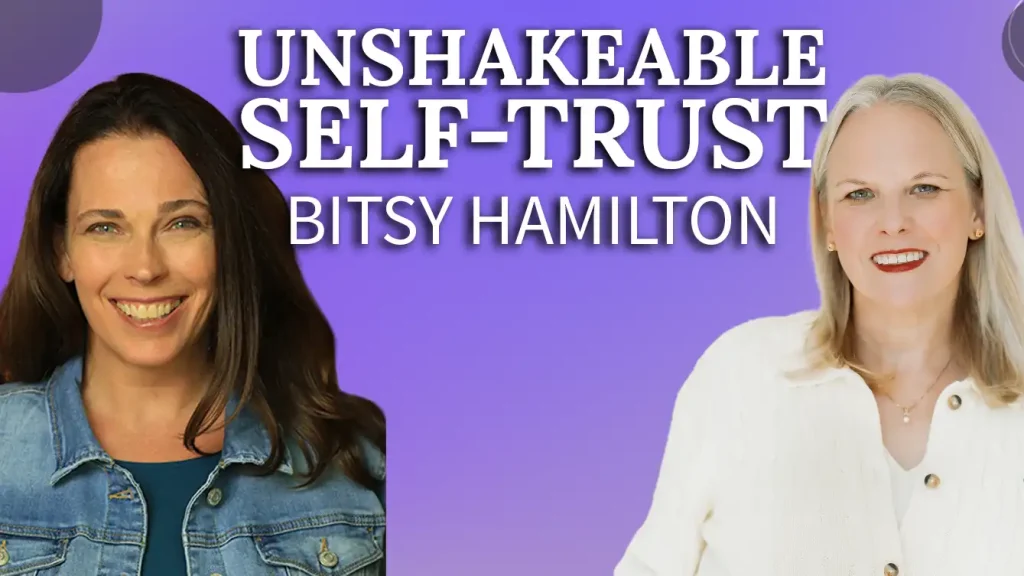
Own It: Bitsy Hamilton on Confidence, Clarity, and Unshakeable Self-Trust
🎙️ Welcome to Healthy Happy Wise Wealthy!
In this warm and deeply honest episode, Mary Meyer sits down with Bitsy Hamilton, a transitional life coach, speaker, and author of Own It: A Guide to Confidence, Clarity, and Unshakeable Self-Trust. If you’ve ever felt like life kept exploding no matter how carefully you followed all the “right” advice, you’re not alone, and this conversation will feel like a deep breath.
Bitsy doesn’t offer tidy five-step formulas; she offers something far more real: a grounded, compassionate framework built for the messy, nonlinear way life actually unfolds. Drawing on her own journey through her parents’ divorce, cross-country moves, chronic health challenges including an MS diagnosis, divorces, job loss, and profound grief, Bitsy shares how she learned to meet hardship with grace and still choose to “own it.”
Together, she and Mary explore why you should vent to your coach rather than poison your support circle, how to carry grief without letting it control you, and why rediscovering your passions can light the way forward. This episode proves that you don’t have to change everything to change your life. You just have to take the next honest step, gently.
🌟 Topics Covered:
- Why rigid self-help formulas fail real, messy lives
- Venting to your coach instead of poisoning your support circle
- The Own It framework: authenticity, vulnerability, accountability
- Navigating transitions you chose, and ones you didn’t
- Rediscovering passions and creativity as a path forward
- Carrying grief with the “grief bucket” approach
- Nature-based coaching and finding your comforts
- Helping companies and employees move through change
Key takeaways:
- You don’t have to change everything to change your life
- Get your anger out with a coach, not with the people you love
- Emotions aren’t bad; they’re information to work with
- Be gentle with what happened to you, then own your next step
- “So what, now what?” moves you forward instead of stuck
- You rarely grow in survival mode, so get safe first
Some questions asked:
- What brought about the book?
- Why vent to your coach instead of your circle?
- Can you share the history that brought you to this work?
- How do you manage your MS diagnosis?
- When did the Own It framework come about, and what does it mean?
- How does nature-based coaching actually work?
- What transitions do people most commonly come to you for?
- If there were one central message, what would it be?
Learn more about Bitsy Hamilton:
- Book: Own It: A Guide to Confidence, Clarity, and Unshakeable Self-Trust (Amazon, independent bookstores; hardback, paperback, Kindle, and audiobook narrated by Bitsy)
- Website: CoachBitsy.com
- Instagram: @CoachBitsy
- Also offers keynote speaking, a TEDx talk, and organizational transition coaching
Resource List:
- Books mentioned: Own It: A Guide to Confidence, Clarity, and Unshakeable Self-Trust by Bitsy Hamilton
- Programs/organizations mentioned: Real Roots (a community for women to make new connections), AmeriCorps, Austin Community College, University of Mississippi (Ole Miss)
- Concepts referenced: the Own It framework (authenticity, vulnerability, accountability), the nine building blocks (including passions and comforts), “so what, now what,” the grief bucket, nature-based coaching, the four trauma responses (fight, flight, freeze, fawn)

Shop HHWW Recommendations:
Sustainable Haus offers High Quality, Chemical & Plastic Free Cleaning, Cooking and Personal Hygiene Products:
Shop HHWW TikTok Shop for Health Conscious Products:
Women: Find Like-Minded, Age-Appropriate Friend Groups in Your Area with Real Roots:
HHWW Business Services:
Alternative Lending Business & Real Estate Investor Loans:
IT Services through Mindiii:
Specialities:
- Product Strategy & Full-Stack Development
- AI-Powered Web & Mobile Apps
- Data Engineering & Analytics
- AI & ML Solutions
- Cloud & DevOps Solutions
- IT Consulting & Dedicated Teams
- UI/UX & Workflow Automation
- Software Testing, Maintenance & Support
Podcast Production and Webinar Services:

Listen, Subscribe, Download & Review HHWW on Podcast Players:
@Spotify: https://open.spotify.com/show/53F8vnXux4kMpwt9lDTMk5
@ApplePodcasts: https://podcasts.apple.com/us/podcast/healthy-happy-wise-wealthy/id1818007426
@Audible: https://www.audible.com/podcast/Healthy-Happy-Wise-Wealthy/B0FC1SXM9F?eac_link=3Fud9HDfBHBR&ref=web_search_eac_asin_1&eac_selected_type=asin&eac_selected=B0FC1SXM9F&qid=fPZMRMoRkC&eac_id=135-4199497-5436329_fPZMRMoRkC&sr=1-1
@iHeartRadio: https://www.iheart.com/podcast/1333-healthy-happy-wise-wealth-278739139
@Pandora: https://www.pandora.com/podcast/all-episodes/healthy-happy-wise-wealthy/PC:1001108771
@JioSavvn: https://www.jiosaavn.com/shows/healthy-happy-wise-wealthy/2/0zjy7AVRt7I_
@Anghami: https://play.anghami.com/podcast/1074378718
Listen to Healthy Happy Wise Wealthy Episodes on Mental Health:

🌟 Like, Follow & Subscribe on These Platforms:
@Instagram: https://www.instagram.com/healthyhappywisewealthy/
@Facebook: https://www.facebook.com/profile.php?id=61575070976908
@TikTok: https://www.tiktok.com/@healthyhappywisewealthy
@LInkedIn: https://www.linkedin.com/company/healthy-happy-wise-wealthy-podcast/
@YouTube: https://www.youtube.com/@HealthyHappyWiseWealthyNetwork/shorts
Know someone who should be a guest? Email healthyhappywisewealthy@gmail.com
Mary Meyer is a podcast host, actor, sales professional, mother and entrepreneur helping people and organizations share meaningful conversations that support health, wisdom, clarity, and growth.
Produced by the All-Talented Erika Christie
#OwnIt
#LifeTransitions
#LifeCoaching
#SelfTrust
#Confidence
#Grief
#DivorceRecovery
#PersonalGrowth
#Resilience
#BeGentleWithYourself
#HealthyHappyWiseWealthy
#BitsyHamilton
Transcript:
[Mary Meyer]
Welcome back to Healthy, Happy, Wise, Wealthy. We have with us Bitsy Hamilton, who is a transitional life coach and author. She says right there, I have read your book.
It is called Own It, A Guide to Confidence, Clarity, and Unshakeable Self Trust. And I felt that I saw, I felt like the book was incredibly just down to earth, like it was very practical, just steps that really anyone could relate to who’s been through some stuff for sure. So Bitsy, welcome.
Thanks for coming on. Tell us a little bit about the book to start out with. What brought about the book?
[Bitsy Hamilton]
Well, great question. I didn’t want to write the book. I drug my feet.
I kicked and screamed. I’m like, I don’t want to do this. And my brilliant publicist and forever friend, Whitney, was like, you really need to write this book.
This is really important. Every time we talk about your work, you know, this comes up. Please write this book.
And I thought, I’m not ready. I’m not ready. I’m not ready.
The inspiration’s not there. And really, it was my boyfriend who not through any, you know, not through any understanding of his own, but just his own passion for everything that he does in life. I was like, OK.
And the passions chapter just clicked out, you know, being around him, being with him, talking to him about all the things that he loves. He was like, OK, it’s time to write the book. So I set myself up for that and started working with my publishers and my editors and all of those things.
And then my mom passed away. My mother of the heart, adoptive parent, who totally stepped in and, you know, was my rock for decades, passed away. And so I was writing this book in the midst of, you know, navigating her loss.
So it kind of gave me it gave me purpose in what was going on in my world. So I the timing, while it felt late, it was perfect. And I would argue the other reason for the book is that self-help drives me crazy, which kind of seems nutty as a life coach.
But, you know, the five steps to the perfect life. I’m like, that’s not that’s not how it works. That’s not how that’s not reality.
That’s not the messy that we live in.
[Mary Meyer]
Right.
[Bitsy Hamilton]
And so that is one of the reasons for the own it framework and for the publication of the book. It’s like, let’s get this out there. You know, yeah, teach people that there are different ways to do this that are maybe a little more accessible and more filled with with grace, with compassion, with space for us to be individuals as opposed to, oh, you must conform to these five things.
[Mary Meyer]
Yeah, no, I definitely felt that. And as someone who’s lived through some stuff, I appreciated how what you shared with everyone, because I do think when you’ve lived through things as an adult teenager, you know, and on, it really does feel like when people give stupid advice, you’re like, but honestly, it’s one of the reasons I started this podcast. I’m like, I do just feel like there’s a lot of advice and advice I was given through things like divorce.
And I know you you are a life transition. You’ve helped people through divorce. So there’s just a lot of things that I’ve heard that I was like, that’s the zero percent helpful.
And now I’m angry at you also.
[Bitsy Hamilton]
Right. I was angry for now I’m angry and I have a new person to be angry at.
[Mary Meyer]
And that that’s reality. That was so my reality for so much of it. So and we were talking right before and you said, you know, you’ve helped a lot of divorcees through it.
And one of the things you said is you can tell me anything, like get your anger all out with me. But don’t share it with your group of of people. Like, tell me about that.
Why? Why is that helpful?
[Bitsy Hamilton]
So why that? Right. Why call your coach and vent to them.
Right. And say all the all the horrible things, all the things that are going on in your head. Right.
Get them out. First of all, it’s really important to get that out so that you don’t sit on it so that you don’t stew with it. But the other part of that is do it with your coach, not your group, not your friends, not your family, not your children, not your coworkers.
Because when you do vent to them, you know, and you call your ex every name in the book and you go off. Well, by the time you’re done, you feel better. But all you’ve done is transferred that anger to someone else.
[Mary Meyer]
Yeah.
[Bitsy Hamilton]
So now it’s, you know, if it’s your children. Well, they’ve just heard you bash their other parent.
[Mary Meyer]
Yeah.
[Bitsy Hamilton]
Well, that other parent is half of them. And depending on the relationships, you know, but usually the children are trying to have a relationship with that other parent. You’ve just put them in the middle.
That’s incredibly painful. You call your parents, your siblings, you vent to them. Well, now when they see your ex at family events, because they still will.
Now they’re holding that anger. They’re holding that resentment, you know, where you dumped it. They ended up being the storage vessel.
So when you don’t poison your pool, if you will, it allows for those relationships to heal and grow and move forward instead of being still stuck in that divorce, you know, stuck in that transit because you don’t want to be stuck in that transition forever. You want to move beyond it. But you also need your support network to be able to move beyond it.
[Mary Meyer]
Yeah. And of course, there’s those that feel better keeping everyone stuck in the quagmire forever. So that’s also the thing there are.
[Bitsy Hamilton]
And, you know, and those are the ones that 30 years after a divorce, they’re still complaining about their ex.
[Mary Meyer]
Yeah.
[Bitsy Hamilton]
And you just look at him and go. Get over it.
[Mary Meyer]
Yeah.
[Bitsy Hamilton]
You know, it’s not that you want to diminish someone’s pain, but what have you done in in the ensuing 30 years to heal? What have you done to move your own life forward, you know, from that place? Because if you’re still stuck in it, if you’re still stuck in that little that spinny spot, that’s not doing anybody any good.
[Mary Meyer]
No, no. So and also I I like what you’re saying because I had a counselor post divorce because I’ve been through a divorce and I asked her specifically. I’m like, I have other people that are just, you know, the friends that I don’t want to I can’t just always be talking to friends about this.
The the bombs that are going off, because really the bomb started going off it, you know, a divorce more than ended. So I need to come to you to vent and to cry and to like get the rage out kind of like you’re saying, and she wouldn’t allow it. She said, no, can’t do that.
We got to move forward. And I’m like, I don’t know if we can move forward if I don’t have a place to get everything out at that isn’t the circle. So I so I really appreciate when you said that.
I’m like, I feel like I want to bring that out to people that are people helpers. It’s like, I think it’s very important that when you’re coming to and maybe coaching counselors are they’re really kind of a little different. But at the same time, it’s like, yeah, at the same time, it’s like even a counselor you think would be maybe even more someone who would like, OK, go ahead and and cry and scream now.
And let’s yeah. And let’s get it out. So you can go on with your day and with your people and stuff like that and rebuilding your circle.
So yeah.
[Bitsy Hamilton]
Well, and it’s the responsibility of a coach or a therapist to recognize the difference between a vent and a spiral. Right. If you’re constantly coming to meet a vent about the same issue over and over again, we need to deal with that.
But if it’s a you know, I just needed to to scream, to unload, to let this go. OK, that’s now out. Now let’s talk about next steps.
Sure, you know, but providing that that direction, that little bit of steering, right, is the responsibility of a coach or a therapist say, you know, you sound stuck here. Yeah. What’s got you stuck here?
Let’s get unstuck. Because most people don’t want to stay in that angry stuck place.
[Mary Meyer]
Sure.
[Bitsy Hamilton]
It’s not a very happy place to be.
[Mary Meyer]
No, you know, I’d love to go backwards a little bit from here. Thanks for that little bit and say so in your book, you talked about your history that brought you to this point of helping people through transition. And so if you could tell us a little bit about that, I know it started with your parents divorce.
It’s just whatever you want to share on that.
[Bitsy Hamilton]
Sure. Started with my parents divorce. They separated two days before my 11th birthday.
So happy birthday to me. And they divorced a year later, a little over a year later, had an arduous divorce, a five day jury trial.
[Mary Meyer]
Oh, my gosh.
[Bitsy Hamilton]
Yeah, it was it was very it was a massive conflict for everyone. Just tempestuous all the way through. And following that divorce, my mother decided to move us.
My biological mother moved us from Atlanta, where we had been raised and grown up to Austin, Texas. So we lost our entire support network when that happened. It’s like, wow, the school you’ve gone to for years, the friends you’ve had for years, you know, your dad, your your extended family that lives there all gone, you know, in the blink of an eye for us.
Yeah. Which, you know, meant at 13, I was making a pretty big transit to make friends, to rebuild. And at that time, 13, you don’t have the language for any of that.
No, you don’t have an understanding of that. I have a bad tendency for myself to be like, but you were 13. Like, you should have been able to handle that.
And then I go, timeout. Now, would I as a coach now say that to a 13 year old? Would I as an educator have said that to any of my students?
No. I would have said you’re 13 and this is heavy. And it’s not on you to carry it.
So I have to remind 13 year old Betsy, you know, that that’s where she was, too. Yeah. So that, you know, huge transit.
They’re learning to cope with that with very, very little support, frankly. School became my safe place and really was all the way, even into the early part of my career as an educator. Right.
Not really a surprise. I picked a career in my safe space.
[Mary Meyer]
Yeah, I’m really glad to hear that the safe space was school. That’s good. And I also just to add to that, even as an adult, moving from one city to another city causes extreme amount of distress.
So if it’s only that and everything else is stable, just the moving from city to city is a life stressor, you know, even if it’s for good reasons. And then to add the loss, a loss of safe relationships in a family. So if anyone in a divorce is doing it where they’re really OK with a child losing safe relationships, I think that’s not OK.
That’s just there’s just nothing in that that’s OK. You know, and if just because it suits your ego, because you’re at war with now the the ex spouse, it’s it’s it’s really creates it creates lifelong things that are very distressing to the to the to the then child. Right.
So and different things like that. So I can’t even say enough. Don’t do that.
Yeah.
[Bitsy Hamilton]
Yeah. Don’t do that.
[Mary Meyer]
Don’t do that.
[Bitsy Hamilton]
You know, it can be hard enough on kids when you move neighborhoods.
[Mary Meyer]
Sure.
[Bitsy Hamilton]
You know, yeah, it’s it doesn’t take that much to create a transition. Transitions aren’t always, you know, sometimes we choose them. You say, yeah, I’m going to get a promotion.
So I’m moving to a new city. OK, I’m choosing that transition.
[Mary Meyer]
Right.
[Bitsy Hamilton]
But a lot of times we don’t. And it’s the ones that we don’t that are actually a lot harder to navigate.
[Mary Meyer]
Sure.
[Bitsy Hamilton]
Those sometimes the ones we choose go. Yeah, but you chose this. That doesn’t mean it’s not hard.
[Mary Meyer]
Still hard.
[Bitsy Hamilton]
And it might not be what you expected. Right. It may not be what you expected.
It may be, you know, you go, wow, I got to rebuild. I need my friends. Where did they go?
Where do I find? Where do I find new friends? As an adult, it’s really hard.
Yeah, yeah, you know, it is hard to meet new friends. You know, I’m very fortunate. I live in Austin.
I I still have a cadre of my friends since middle school. That I, you know, thank God for them. But right, you know, and and meeting news as well.
But it’s just it’s very, very hard in our society to meet new people. It feels like everybody’s inputs are kind of already full.
[Mary Meyer]
Yeah. And I’ve had to do that several times because post divorce, I moved from Nashville to Atlanta and now then Atlanta to Reno and little moose in there and all those places. So it’s yeah.
And even in Nashville, there wasn’t I really had to read for the most part, come up with a new group of people. You know, I didn’t have the old group of people post divorce. And then moving to Atlanta, of course, you just have to come up with a whole new group of people.
And the same with Reno. And I I have found I would say I would go to networking events, you know, just doing different things with that. And it would be I was in the creative world in Atlanta.
So I would go to different creative networking events. And I know there’s groups like that. And it would be a little overwhelming.
So to just go into a group of people by yourself. And so I would I would always say to myself, you meet three people, you go home if you need to, like, or just meet one person, just make a connection with one person. If you’re still overwhelmed, go home, you know, and kind of give myself that out.
And so in Reno, then it’s been more entrepreneurs. But that has been a way to do it. And it is hard to do it, I think, to to read.
And I think certain careers make it easier. There’s there’s might be a certain network, more networking and some things than others as an example. But, yeah, for sure.
[Bitsy Hamilton]
I mean, the creative world versus, you know, let’s say computer programming, very different.
[Mary Meyer]
Yeah, very different. Yeah. And I also started I’m just going to throw this out.
I started working, you know, here and there with a company called Real Roots, which is for women to meet people. So it’s like they say they yeah. I’ll probably just say that to put that in the show notes.
So it’s a way for them to as adult women is for women only but to connect with just other women for the exact reasons you just stated. So it’s a huge issue. Yeah.
As an adult to make those transitions, for sure. Thanks for bringing that up. Yeah.
[Bitsy Hamilton]
Yeah, absolutely.
[Mary Meyer]
So then after, you know, you you had more life, big love transitions you talk about in the book.
[Bitsy Hamilton]
So after that, you know, you went to college and then go from there and the store went to college, went to the University of Mississippi, pushed myself hard, graduated in three years. I was 20 when I finished my undergrad.
[Mary Meyer]
Amazing.
[Bitsy Hamilton]
That was a mistake. I had not cooked long enough at 20 to be starting a PhD program, which is where I headed after that. And nope, nope, it was not great.
Did not love it. I started at Texas A&M, and that was the semester 9-11 happened, which was not a good time to be on the A&M campus at all. So I ended up transferring back to Ole Miss and eventually took my master’s degree there after navigating some health issues that kept me away from the PhD.
But, you know, yeah, it’s like, OK, so here’s here’s this new variable, right? Here’s here’s chronic health issues. Started in my 20s.
And then in 2017, I was diagnosed with multiple sclerosis. So that is its own journey.
[Mary Meyer]
Absolutely.
[Bitsy Hamilton]
You know, well, and I manage that.
[Mary Meyer]
How do you manage it? And I also appreciate you bringing this up because this is also common for women who seems like women who have, you know, like were the overcomers, maybe in the family of origin, had some stuff they had to just grit through and get through. And then the next stage of life, like you’re you’re a high achiever now, the one who gets things done.
And then the next thing, you know, I mean, I got Lyme disease. So like, you know, yeah, stories are a little a little this similar. So I was reading your book.
I’m like, yep, yep, I get it. And that’s and so what happened with that? I mean, are you still dealing with that?
Did you find some?
[Bitsy Hamilton]
You know, it is something I will deal with lifelong, most likely. But I got really lucky. I frankly did not listen to my doctors and said, you know what?
I don’t like what you’re telling me. I don’t like what you’re telling me. My options are because they were very negative.
They said six months wheelchair.
[Mary Meyer]
Oh, geez.
[Bitsy Hamilton]
You know, you can anticipate the worst of the worst. And I said a few choice words, which I will summarize for you, which was that’s not going to be me.
[Mary Meyer]
Good for you.
[Bitsy Hamilton]
And started finding alternatives, got really lucky in that. I still do experience symptoms. You know, it’s it is definitely something I live with.
August and February are my two worst months of the year. That’s when it’s been cold. And that’s when it’s been hot.
So the temperature change is is where I kind of fall apart every year. But but I know that.
[Mary Meyer]
Yeah.
[Bitsy Hamilton]
So it’s oh, you know what? Maybe I need to go spend some time in cooler climates in August or, you know, come February, it’s time to go find some sunshine.
[Mary Meyer]
Yeah.
[Bitsy Hamilton]
You know, a little traveling. Put myself in a better position for that.
[Mary Meyer]
Yeah.
[Bitsy Hamilton]
But it is something, you know, it’s lifelong. And I know when I’m not taking care of myself. You know, after my my mom of the heart passed something about, you know, surviving on peanut M&Ms and Diet Dr. Pepper for a week just didn’t really cut it. I was like, am I taking care of myself? Absolutely not.
[Mary Meyer]
Right. Right. Yeah.
[Bitsy Hamilton]
So there is that constant for me. When I stop taking care of myself, I know it very quickly.
[Mary Meyer]
Right.
[Bitsy Hamilton]
My body, you know, hurry.
[Mary Meyer]
Yeah, I can relate to that. I’ve like in recently, for example, with me, I feel like I’ve been exposed to more chemicals than I have been in, like, my whole life between work and where I’m living and stuff like that. So I’m like, this is not not great.
So a detox. And I’ve had a lot of people on here talking about detox and different ways to support the body. But it does seem like there’s an emotional, physical, definitely an emotional and physical connection that can happen with that.
So, oh, absolutely. All the ways to support the body by, you know, taking bad stuff out of the environment in your diet and adding good stuff in and doing in a way that’s, you know, movement, you know, all the all the things that we need to do.
[Bitsy Hamilton]
So, yeah, it’s one of the reasons communities used to come together a lot more than they do now. But when someone would go through, you know, whether it’s the birth of a child, a wedding, a funeral, you know, you name it. What does everybody do?
Oh, we bring food. We bring, right? Right.
Let me let let us as a community nurture you while you’re going through this time.
[Mary Meyer]
Yeah.
[Bitsy Hamilton]
Let’s let’s make it to where you don’t have to think about what you’re going to eat, because that’s how you end up eating peanut M&Ms and Diet Dr. Pepper for a week. But let us be there for you. Right.
You know, I mean, there’s a reason there’s a Southern recipe called funeral potatoes.
[Mary Meyer]
So I’m saying I’ve lived in the South and I don’t even know about funeral potatoes. What how how did I live there for 25 years? And I’m here, but you don’t know.
They’re amazing and they freeze beautifully.
[Bitsy Hamilton]
So OK.
[Mary Meyer]
Don’t look that up.
[Bitsy Hamilton]
Yeah, it’s things like that. That, you know, how do we come together and support individuals? You know, it’s fine to, you know, like an Instagram post or make a note on a Facebook page.
But that’s not the same. That’s not the same level of support as, hey, I’m just going to come sit with you. Or if you’re not up for that, I’m just going to drop off dinner for you.
[Mary Meyer]
Yeah. So little things like that just to let people know they’re seen in some just like very practical health. Food is very practical health.
It’s a very Southern thing to to bring a meal, you know, the meal, the old meal train.
[Bitsy Hamilton]
Oh, yeah. Get that, you know, I yeah, I think they’re life saving.
[Mary Meyer]
So yeah, it can be great. So and then you had some transition to if you started as an educator and then you got the notice where you’re fired at, you know, and all that kind of stuff. So you had four in the morning.
[Bitsy Hamilton]
I think he sent the email sometime in the middle of the night. I got it when I got up to go to, you know, to head to campus, which and I was like, oh, OK, you know, this coming from a head of school. I was a history teacher, history, government, you know, social studies.
And this came from a head of school who said they don’t need history. They have Google.
[Mary Meyer]
That’s insane.
[Bitsy Hamilton]
I think you’re missing what we’re teaching in a history classroom.
[Mary Meyer]
That’s crazy.
[Bitsy Hamilton]
You know, yes. You can Google a date. You can Google a name.
You can read a Wikipedia article. That’s not the point.
[Mary Meyer]
You know, I just don’t even understand how anyone can go there as an educator that doesn’t even make any sense. But yeah, so some some life is too. And then you were married and then had the tell me a little bit about all of that.
I know it’s in your book and sure.
[Bitsy Hamilton]
I mean, married twice, got married young. We divorced after nine months. It was not something I ever wanted.
I did not want to end up divorced, and I beat myself up really hard about it because it felt like I am a failure. You know, I couldn’t make this work. I couldn’t make my husband happy.
This is a betrayal of, you know, my own personal faith. What have I done? And that was reinforced by some of the outside influences, and that caused even more damage.
You know, a I had moved from where I lived in Mississippi out out to Arizona, you know, was trying out new churches that did not go over well. Being, you know, being 25 and divorced was not was not well received there at all. Yeah, but.
You know, ended up once again, going back to Mississippi. I think I will forever go back to Oxford, Mississippi, but did get remarried, started back in education, really loved what I was doing. And my husband couldn’t keep a job where we lived.
So ended up moving to New Orleans to follow him for his work, which New Orleans is one of the most amazing experiences of my life. I will take that city all day long. Good, bad and the ugly.
It is magic, and it certainly was for me. I got lucky because there was an arts market right across the street from my house every month and being around people who were creative, being around, just I said, I can’t not create anymore. I need to do this.
Oh, yeah. You know, I was always a painter. I and I just I had hung it up years before.
Really, when we moved from Atlanta. I just that that part of me shut down. So I was able to find that again, living in New Orleans.
[Mary Meyer]
I’m so glad to hear that. Some of the rest of it didn’t work out great, but that part did.
[Bitsy Hamilton]
You know, you find creativity.
[Mary Meyer]
Yes, very healing. Creativity is healing. It is when you can get into it.
And there’s a lot of different ways you can be creative, for sure.
[Bitsy Hamilton]
Well, and that’s one of the reasons I talk so much about passions in my book. Your passion, what are your passions? What are your talents?
What are the things that move you forward? Where is that? What’s that spark?
Because we all have something that we refuse to let go out. Whatever it is, and it’s different for everybody. But what is that one thing that if somebody truly comes after it and says you’re no good at this, you can never make a difference doing this.
That you will fight tooth and nail for it.
[Mary Meyer]
Yeah.
[Bitsy Hamilton]
What is that thing? For me, it was it was my art.
[Mary Meyer]
Yeah.
[Bitsy Hamilton]
But for other people, again, what is that? What is that one thing?
[Mary Meyer]
Yeah. And that goes to just the core of your humanity. I think when we can when we’re able to create it, it it digs into something that’s so important and eternal.
Maybe, you know, it just feels like it’s a very gifted spot.
[Bitsy Hamilton]
So, yeah, be it be it art, be it music, be it writing, whatever, you know, be it athletic pursuits. There are so many ways to be creative.
[Mary Meyer]
Right.
[Bitsy Hamilton]
And sometimes we think of it conventionally. Right. You know, it’s art, it’s music, it’s painting, but it is more than that.
[Mary Meyer]
Yeah, absolutely. Well, and then you had the and I appreciate you sharing all your story. I think part of this for me is just like when you go to someone for advice and like when someone picks up your book to read it, they know it’s not going to be from someone who is just like it’s just kind of been a pretty easy going life.
Like you’ve had some you’ve had you’ve had things. And so the I appreciate that as someone who’s been through things because when I when I listen to advice by someone who’s it’s gone pretty well for them. And I’m really glad for that.
I just don’t want your advice because I just don’t think you’re going to like be able to to comprehend necessarily. And sometimes that advice is still good, depending on what it is. But when you want to dig into it, it’s a little tougher.
So, yeah, I know what was the transition like? So there was like the second that second husband that divorced also and then the career was lost. And I imagine at that point you felt and then you have health issues.
I imagine you felt the most overwhelmed in that space. Right. Yes.
[Bitsy Hamilton]
Yes. It was because I was like, OK, I’m leaving the classroom, not by my choice. I am, you know, kind of just flailing around lost.
What do I do? You know, where does this go? And I said, OK, you know, time out, time out.
What is it you want? What do you want to do next? Where do you want to head next?
Is it back into the classroom? Maybe. Is it is it something else entirely?
And I took the opportunity to move back into college counseling and really start, you know, developing that part of my business again and coaching, which is kind of an interesting. There’s an interesting intersection of those two things. So I took a year and I took what I call it my adult gap year.
But I took a year as an AmeriCorps volunteer. Yeah. So I said, I just want to be able to help people, you know, what talents, what skills do I have that will help people?
Well, I can help kids get into college. And I’m actually really good. So let’s do that for a year.
And that springboarded me into teaching for the local community college here part time. It’s like, OK, I can teach community college part time while I get my coaching business up and running.
[Mary Meyer]
Yeah.
[Bitsy Hamilton]
Like that’s my safety net while I do this, you know, and loved it. Loved it. Community college is an amazing place to teach.
[Mary Meyer]
That’s good to hear. Yeah.
[Bitsy Hamilton]
I was lucky for, you know, Austin Community College limits its classes to 38 kids. Kids, they’re not really kids at this point, but right.
[Mary Meyer]
Right.
[Bitsy Hamilton]
38 students. That’s a tiny college classroom. That is a tiny college classroom.
[Mary Meyer]
Yeah, that’s so and that’s not a lot of people.
[Bitsy Hamilton]
It’s not 250 in a lecture hall, which I’ve taught before, too. But I was like, 38, this is great. I get to get to know them.
I learn their quirks. I learn what’s working for them. You know, the guy in the back who’s always like, can the answer to number seven be be maybe.
Maybe. Yeah. On the final exam was the answer to number seven be absolutely.
It was. Why? Just because it’s funny.
You do it for the bit. Why not? But I love those interactions.
I love that interplay. Yeah. Covid was what ultimately kind of pushed me out of of the college counts or the community college classroom.
Just it was time. You know, business was doing other things. Covid was hitting.
It just it was time. And but, you know, how fortunate to have that piece just as part of the puzzle. Yeah.
[Mary Meyer]
And everyone looking, I’m sure, for for different coaching advice during Covid, that was a rough time for everyone. So is it is it during that time? I know.
OK, what do you call it? The the own it framework. That’s what you call it.
So the the. Authenticity, accountability, vulnerability. Yeah, I wrote my notes.
So is that I mean, when did you when did this come about the own it framework? And it’s in your book, it’s your book is so good at going, hey, I am going to call you out now. I understand that now you’re being called out.
So this is the time.
[Bitsy Hamilton]
Yeah, it’s like I get it.
[Mary Meyer]
Are we going to own it now?
[Bitsy Hamilton]
Yeah. Are we going to do that?
[Mary Meyer]
Yeah.
[Bitsy Hamilton]
So own it became something I used. It was a phrase I used early in my teaching career. I was I taught at a boarding school in Georgia and had thirty five teenage boys that called me mom, which, yeah, loved them.
Just it’s just amazing people. Most people don’t really love teenagers. I think they’re wonderful.
But talking to them, you know, because what do teenagers want to do? They want to make a mistake and they want to sweep it under the rug. And you go, huh, I need you to own that.
I need you to have a conversation with me about why you thought that was a good idea. And they go, oh, like, I’m not really interested in you being in trouble. I’m interested in you learning to think.
Yeah. Because, you know, the frontal lobe, the frontal cortex is not developed yet. So trying to get them to, you know, walk through that.
And they got to the point they’d come, they’d come get me. I’m really sorry. I really screwed up.
Here’s what happened. And here’s where I stopped thinking. You go.
That’s that’s great. OK. That’s a tremendous amount of self-awareness.
So that’s really where the own at peace started.
[Mary Meyer]
OK.
[Bitsy Hamilton]
And it just became a catchphrase, you know, mostly in working with teenagers. But finally, a friend who actually had been a teenager that I taught said, you know, you say this all the time, what does it really mean? Like, what’s really behind it?
And I thought, I guess I need to really lay that out.
[Mary Meyer]
Yeah.
[Bitsy Hamilton]
And sure enough, I started laying that out and it became it evolved into this bigger framework of, OK, can I really can I teach more than just the kid in front of me? You know, how does this apply in my own life? How does this apply in other people’s lives?
So it was it was a lot of work and a lot of experimentation with clients. It’s like, sorry, you guys are going to be my guinea pigs on this while I work on it. But it developed in a way that I thought, you know, this is working.
Really, this can work for anyone. It’s it’s not just this, you know, five steps to the next. Right.
It’s not this, you know, extremely regimented system. It’s the hey, you know what? Today sucked, but we’re going to suit up and play again tomorrow.
And it’s going to be OK. Yeah, like be gentle with yourself. Let’s just pick up tomorrow.
And people are like, that’s allowed. Yeah. Yeah, it is.
That’s part of being human.
[Mary Meyer]
And I think it’s that piece that makes it so like, oh, where you can go, someone who’s lived through a lot because you’ve lived through a lot of stuff. It’s like to own it. I think if someone came to you, hadn’t lived through a lot of stuff and said, own it.
And you’re like, OK, what was done to me as a teenager was done to me. I had no say in it. The right.
The health issues is not something I chose. Like I’m supposed to own.
[Bitsy Hamilton]
Right.
[Mary Meyer]
So the you know, the the men who were bad husbands or what? You know, like, yeah, the people, the church that was very not not kind about it all. Like, how do I the pink slip in the middle of the night?
So so you’re saying you’ve had stuff going, you know what I mean? I’m just saying it like when you look at that and people go, you don’t understand, I’ve lived through some stuff. It was not my fault.
And you know, and it happened to me. And absolutely. So that’s what I hear you’re saying.
Absolutely. It happened to you. So be gentle with yourself.
[Bitsy Hamilton]
Yeah.
[Mary Meyer]
And now let’s own it.
[Bitsy Hamilton]
And sometimes I do with it.
[Mary Meyer]
We do it to ourselves. Sure.
[Bitsy Hamilton]
Sometimes we make a choice. Or we make a mistake and we go, oh, oh, that that was bad. That was bad.
Now, the question is, what do you do with that? What do you do with it when it was your choice that led to an an outcome you didn’t want?
[Mary Meyer]
Sure.
[Bitsy Hamilton]
And so many of us will either will run from our mistakes or we’ll sit in them and we’ll punish ourselves for making them. OK, no, no, no, this is where we go to. And this is my father’s catchphrase.
So what now what? And people go, you don’t care. I’m like, no, no, no, I care tremendously.
But so what? So what did you learn from this? So what do you need to change moving forward?
And they go, oh, like now, what are we going to do? This is the situation. Now what?
And it’s like this is about moving through it, not staying stuck in it.
[Mary Meyer]
Yeah.
[Bitsy Hamilton]
But also not dismissing it and dismissing the lessons from it.
[Mary Meyer]
Sure. So in your coaching, how does it apply in this different situations that you encounter with people?
[Bitsy Hamilton]
So, you know, that you have what I know, what in the framework are called the three keys, which authenticity, vulnerability, accountability. Exploring those first. Because usually when you say to someone, who are you?
I get a deer in the headlights, right? Who are you? What makes you you?
That can feel a little aggressive to a lot of people.
[Mary Meyer]
So it’s so hard. It’s so, you know, yeah. I mean, even like I’ve had to write a bio and I’m like, it’s the way I hate it.
I absolutely hate it. I might change it up every year to. Yeah, it’s tough.
Yeah.
[Bitsy Hamilton]
And that’s OK. You know, because who you were a year ago is not who you are today. So your bio should change.
Yeah, it should change to reflect who you are now. Right. That’s part of authenticity.
You’re not the same person you were when you were 16, right? So no. Why do we feel like we have to be frozen as adults?
[Mary Meyer]
Yeah.
[Bitsy Hamilton]
You know, why do we think we should be fully formed as adults?
[Mary Meyer]
I think we do change every like I feel like there is a different shift every decade as an adult. Like I feel like we continue to mature and in kind of the same. I feel like we kind of all mature in kind of the same way almost every decade.
Do you think so? I think I’ve never heard. I mean, I’ve never heard anyone talk about that.
But I’m like, I kind of feel like it’s the case.
[Bitsy Hamilton]
I will say like moving into my 40s was a big shift in just mentality and attitude and expectations and frankly, in what I will tolerate from others. Yeah, I was, you know, I hit 40 and it was like, you know what? There’s a lot of stuff I worried about in my 20s and 30s that I’m not worried about anymore.
You know, I’m not focused on. I’m not afraid in the same ways that I was before.
[Mary Meyer]
Yeah.
[Bitsy Hamilton]
So I think it’s important. I do think it’s important to take stock and reflect. And that is often something, you know, one of the places that I find is often an entry point for people is to talk about their passions.
What do you love? What lights you up? What could you talk to me about for 45 minutes straight and still have more to say?
[Mary Meyer]
Yeah.
[Bitsy Hamilton]
What did you love when you were a kid? You know, what was your favorite? What was your favorite toy?
Your favorite movie? What did you think you wanted to be? You know, my personal favorite right now is one of my friend’s sons who would like to be a jet powered dinosaur, I believe, is where we are this week.
And I’m like, awesome. I mean, I love it. But let’s talk about being a jet powered dinosaur.
I love it. Be creative. Have fun with it.
[Mary Meyer]
Yeah. You know what you’re saying? I love it when podcasts come on and they’re saying kind of the same thing, because I feel like then we’ve really discovered something that’s very true.
So I had a lady on who wrote the book Unburned, Sarah Olshleg. And she said that she’s like someone asked her, what would you like to do when you were a kid? And she’s like, why are you speaking?
No. What does that have to do with anything? And then you just said it again.
So I just just to say, I feel like this is a thing now. Like what lit you up when you were before the world happened to you? Maybe.
[Bitsy Hamilton]
Yeah. Before the world told you who you were supposed to be. What did you want?
You know, and our imaginations are never as sharp or as open as they are when we’re kids.
[Mary Meyer]
Yeah. Which is why sometimes we’re going to let kids not be on the screen, right? And go go do stuff.
That’s another little thing, another little tidbit. Let’s not do that.
[Bitsy Hamilton]
Exactly. Because these are important years.
[Mary Meyer]
Yeah.
[Bitsy Hamilton]
Sure. You know, let them let them play. Let them engage in free play.
Let them go play in the woods and build forts and, you know, talk to their toys and let their toys have conversations and let them do. Please let them do that.
[Mary Meyer]
Yeah.
[Bitsy Hamilton]
You know, all too often, I know, I guess it was when I was married the first time my then sister-in-law had a nephew. You know, she was having her first. And it was like, we want all educational toys.
And I’m thinking that aren’t blocks and things like that educational, too? But yes, like, yes, it is. It really is learning how things fit together, building something.
How many blocks can you stack before it falls over?
[Mary Meyer]
Mm hmm.
[Bitsy Hamilton]
People don’t. Adults don’t often realize that, like, that is formative play.
[Mary Meyer]
Sure.
[Bitsy Hamilton]
So I had.
[Mary Meyer]
For sure. I was watching my grandbaby yesterday and she’s three. And she we found her because I recently moved.
So we found her her kitchen stuff and she was so excited. So she made me fake coffee and put in some onion and some avocado. And I’m like, so, you know, thanks for doing that.
I know the only thing I thought of when you started saying that, I’m like, yep, the imagination does go crazy.
[Bitsy Hamilton]
Well, and while I don’t think that’s like a game winning recipe here. But imagine if she continues that.
[Mary Meyer]
Right.
[Bitsy Hamilton]
Right. She continues to experiment with food and flavors and combinations and textures.
[Mary Meyer]
Yeah, for sure.
[Bitsy Hamilton]
Like, wow. I served grandma, you know, coffee with onions in it and avocados. I’ve come a long way.
[Mary Meyer]
It’s like this is so good. Yeah. And she does love cooking.
So this is a great example. You know, such a great example of that. Yeah.
[Bitsy Hamilton]
And I used to say with the profession. Right. Like, you don’t have to be a professional chef.
She just may be somebody that loves to cook for fun and try new things. And, you know, and have that novelty in her life through that, that avenue. Like, yeah, please let them.
[Mary Meyer]
Absolutely.
[Bitsy Hamilton]
Yeah.
[Mary Meyer]
And she and her mom do so much of that. It’s so fun. Let them do all the creative stuff when they’re little, you know.
[Bitsy Hamilton]
Well, and yeah. And why don’t we do it as adults? There you go.
Right. Oh, you love to cook. You love to bake.
Try a new recipe once a week. Try something new.
[Mary Meyer]
Mm hmm.
[Bitsy Hamilton]
Why? Because that novelty feeds us.
[Mary Meyer]
Yeah. Yeah.
[Bitsy Hamilton]
It’s for sure.
[Mary Meyer]
It is so important. Yeah. So that’s that’s a piece I love.
I do love that piece also, because I think when you’re going through and I say this, I adopted teenagers. So I would say with them, it’s like, yeah, you do need counseling and some of that, but you also need forward focus. And so I feel like that’s maybe a little bit what you’re saying.
But it’s like, what are you good at? Because like, yeah, I know this is all like going move into a different country and having a new learn a new language. That’s kind of what they went through and all plus all the other stuff.
That’s traumatic. So what are you good at? Like, what do you like?
That was a big it’s a big focus for me as a parent, you know, because you have to have something to be excited about. You know, too.
[Bitsy Hamilton]
Well, it’s a really important part of knowing someone.
[Mary Meyer]
Right.
[Bitsy Hamilton]
Yeah. I mean, I remember sitting at dinner with somebody that I had been dating for quite some and had known for quite some time. And I was talking about Formula One and car racing with the people we were at dinner with.
And he looks at me and goes, how did I not know this about you? I thought, well, because you haven’t been paying attention that and you go hunting every fall. So you don’t really pick up on this.
You know, you go hunting on the weekends. I’m home. But, you know, you think, wow, how long have I known you that you don’t know this about me?
You know, you’re you’re not aware that I have this passion. Hold on. I need to rethink some things about this relationship.
[Mary Meyer]
Yeah. Yeah. So this is this is such good stuff.
And the book goes so much deeper. So I know we’ve covered, like, you know, you kind of you kind of own what your past is. And yeah, you know, you own your mistakes, you find out your passion.
What else in in helping people transition in life from different seasons or blow many explosions?
[Bitsy Hamilton]
You know, and one of them often that I talk with, well, there are there are nine of them. But one of them that comes up that clients are surprised by is comforts. Right.
What’s your comfort? Is it the cozy blanket? Is it a particular artist’s music?
Is it, you know, spending time in nature? Where do you get to feel holy yourself and safe? Where does that come?
Because so many of us, when we’re going through these big transits, it’s like I got nothing. Right. What is my comfort?
I need it, but I don’t even know what it is. And identifying the things that we use that are healthy. Right.
As opposed to the ones that are maybe less so.
[Mary Meyer]
Right. So focus on something that’s the big, bright light. We can move ourselves towards the thing.
I, you know, I I know nature was the only thing that really helped me be feel real grounded, I think, when I was going through the worst of the worst. So that’s, you know, nature is very grounding. You know, and you can kind of like just be aware in your senses and try to get out of your mind and the and the negative stuff going on.
[Bitsy Hamilton]
When I get the opportunity to do nature based coaching with clients, it is some of the most powerful work that I get to do.
[Mary Meyer]
Really?
[Bitsy Hamilton]
And it’s not even me doing most of the work. It’s nature doing it.
[Mary Meyer]
So what is that? How do you how do you do it?
[Bitsy Hamilton]
So working in that capacity, you’re with your client, preferably outdoors, but you’re asking them to to ground to take things in, you know, sit for a minute. What do you notice? What do you notice in your body?
But what do you notice around you? You know, what do you need right now? Well, I really need to feel like really deeply grounded and safe.
Well, how would it be to sit with your back against a tree? How would that feel to draw on that? Instead of just trying to hold it, trying to hold yourself together all the time.
[Mary Meyer]
Right.
[Bitsy Hamilton]
Is there something here that holds you together? I really don’t remember the last time I had a good time. When did I last like frolic?
I don’t know. But is that what you need right now? Yeah.
Let me go frolic. Like, please go do those things. And and just nature gives us so much clarity, I think, because it strips away a lot of the noise that surrounds us.
[Mary Meyer]
Right.
[Bitsy Hamilton]
You know, I’m so worried about this. Why? Tell me why you’re worried about it.
[Mary Meyer]
Yeah.
[Bitsy Hamilton]
Well, this, this, this. Oh, wait, maybe that doesn’t really matter. OK.
But when you when you get away from home, when you get away from, you know, the Internet, the cell phone, the just when you can strip all of that away, it really helps clarify what’s actually important.
[Mary Meyer]
Yeah. I used to I used to say, I remember when I was hiking, I was like, when you go to the mall, you need everything. Then I go to nature.
I need nothing. Like, I just need what’s here. And it’s just it’s very it’s very interesting.
But I think don’t you think when you’re going through really hard stuff, that’s when people reach for drugs and alcohol or, you know, sex or porn or something that’s very not helpful to them. Food by they go shop for things. So we’re reaching for probably this, the light up, the joy receptors we’re trying to make ourselves happier to numb out the bad, which makes it worse.
So like what I think what you’re saying is then actually, no, let’s let’s light it up with what you used to bring you joy. Like, let’s go to nature. Let’s let’s find your passion.
[Bitsy Hamilton]
Yeah.
[Mary Meyer]
Yes.
[Bitsy Hamilton]
I mean, it’s because what we’re doing is we’re looking for the dopamine hit. Right. We’re looking for a thing that feels good.
And, you know, sure, sex, drugs, alcohol. That may all feel great in the moment. Yeah.
But it doesn’t stay with us. Yeah.
[Mary Meyer]
And it actually can be very harmful.
[Bitsy Hamilton]
It can actually be very harmful, you know, food. People kind of people can go different ways with that. It can either be this is a thing I can control.
You know, and that tends us towards eating disordered behaviors. It can be a well, cupcakes taste good. So I’m just going to, you know, eat the whole 12 pack of them today.
[Mary Meyer]
Right. Yeah.
[Bitsy Hamilton]
It’s like, OK, here again. You’re yes, you’re getting a hit, but it’s not a sustainable one. You know, yeah, let’s let’s go for a 10 minute walk.
Let’s go for a 20 minute walk out in the woods. Take the earbuds out. Listen to what’s around you.
Like actually listen, not be on the phone, not even be listening to music. Just really give yourself. And not everybody has a has the capacity for at this day and age.
It’s like, I got to be on my phone. No, no, no, you don’t. Yeah.
But baby steps. Right. Five minutes, 10 minutes.
Let’s build it up. Your blood pressure will come down.
[Mary Meyer]
It will help. It will be better.
[Bitsy Hamilton]
You will feel it. Clarity will be improved.
[Mary Meyer]
Yeah. You know, I really good.
[Bitsy Hamilton]
I noticed it just my boyfriend owns a farm out of town and I’m there most weekends. I noticed a difference just in my blood pressure when I’m at home versus when I’m out at the farm.
[Mary Meyer]
Oh, yeah, for sure. I feel like that in Reno, because it’s not this is not a good grounding place, but Tahoe is very close. And so it’s it’s a you know, it’s a yeah, Reno just it feels very it’s not it’s a good place.
It just feels very dry, desert-y. And you go even just to drive south a couple of cities and you’re like, oh, towns is not even cities.
[Bitsy Hamilton]
Yeah.
[Mary Meyer]
Nevada has two cities. That’s pretty much most of the state. It has Reno in Las Vegas.
That’s basically the state. There’s a few little towns in there, but it’s it’s it’s very different. I was saying before I, you know, lived in the southeast for a long time and moved from Atlanta, so we have that in common.
So it’s very different, very, very different.
[Bitsy Hamilton]
Yeah.
[Mary Meyer]
And but finding nature where you’re at, there’s hopefully someplace you can feel that nature. And some places I think are easier to find it than others in my experience. Um, but very much go find it.
[Bitsy Hamilton]
Yeah, it was not a mistake that I chose to buy a house that is next door to a pocket park.
[Mary Meyer]
Oh, yeah.
[Bitsy Hamilton]
So, you know, it’s like, hey, I’m going to take a few minutes and go down to the park. Yeah, it’s right here and meander around or sit on the bench or just just feel grass, you know, be around something. Be away, like leave the phone at home.
It’s fine. Be away from it’s like nobody needs to get me for the next 20, 30 minutes.
[Mary Meyer]
Right.
[Bitsy Hamilton]
There is there very rarely is life that urgent.
[Mary Meyer]
Mm hmm.
[Bitsy Hamilton]
Though we tell ourselves that it is.
[Mary Meyer]
Yeah. And not necessarily. Yeah.
So what do people for the transition in life? What kind of things divorce is one? Is there other things that people commonly come to you for for help?
[Bitsy Hamilton]
Divorce is one career changes is another one because some of those we choose, some of those we don’t. You know, it’s that this is a midlife pivot. I have been doing XYZ for the last 10, 15, 20 years.
I want to do something different. It can also be empty nesting or just those transitions with kids. Big moves are another part of it.
You know, hey, I relocated from Atlanta to Reno. OK, now what? Yeah, this is a big change.
Loss of a spouse, loss of a parent, loss of a parent is one I’m seeing more and more, especially for those of us that have been caregivers.
[Mary Meyer]
OK. What do you find with that? I’ve not had a conversation about that yet here.
But what’s it what does it feel like when that happens with people?
[Bitsy Hamilton]
So for a lot of people who have been caregivers and I’ve been in that role as well, it is there’s a loss of identity, right? Because often the caregiving has become your that’s the center of your world. You know, how is mom today?
How is dad today? Are they getting the support they need in assisted living or memory care? Or am I caring for them at home?
Did I give up my job to engage in this? Did I? When’s the last time I saw my friends?
How much how much of life has passed me while I have been in this caregiver role and what’s left for me now that that’s done? It is extremely fatiguing to be a caregiver. Demanding it can most of those to go through it, they will find that, you know, hey, I didn’t take very good care of myself during this.
It’s like, did you did you make time for you? How is your health? You know, yeah, you made sure mom got to the doctor, but did you go?
Did you take care of your needs? Yeah. You know, there’s a reason that many women who have found themselves as caregivers will find themselves with breast cancer afterwards.
[Mary Meyer]
Oh, wow.
[Bitsy Hamilton]
Stress is. If we don’t handle it, stress shows up somewhere, you know, be that in a heart condition, be that cancer, be that another chronic illness. You know, and we forget to take care of ourselves.
[Mary Meyer]
Yeah, that emotional piece, I do think that can affect our health so much, so much. That’s just it’s so interconnected. We look at them as separate, but it’s not separate at all.
It’s not not even at all.
[Bitsy Hamilton]
Separating the emotional from the physical is it’s not only impossible, but it’s kind of a lie that modern medicine has tried to teach us, I think. Yeah, we can fix it with a pill. Well, do I need a pill or do I just need to start moving my body more?
Yeah, or getting better sleep or getting better sleep or getting my diet or spending time with people or with your passion or yeah, right. I mean, or a good cry.
[Mary Meyer]
Lots of good cry, right?
[Bitsy Hamilton]
You know, what else can we look at as a way to, you know, address depression, anxiety? I mean, the two are linked, right? The emotional and the physical.
I mean, yes, modern medicine can work wonders, but it’s not the only piece of the world.
[Mary Meyer]
Mm hmm.
[Bitsy Hamilton]
You know, and so often I see it’s like, well, just throw a pill at it. Well, like, hold on.
[Mary Meyer]
So what do you say with people who are doing that? What’s the kind of the path you take people down who are caregivers who now they lost a parent?
[Bitsy Hamilton]
You know, it is about redefining the next chapter of their life. And acknowledging the grief and knowing that that grief doesn’t go away. You know, it may not always be as strong, but it will not go away.
So are you going to let it control you? Or are you going to let it be a companion? Because when we treat our when we treat our emotions as adversaries, right, rather than acknowledging them, that’s when they tend to become problematic.
Yeah, you know, that’s the anger I can’t shake. That’s the grief that controls my life. That’s the thing.
And you go, hold on. Hold on. How do we reframe this in a way that actually is supportive for you?
Mm hmm. You know, like I will I will always miss my mom. Always, you know, my mom of the heart, I will forever miss her.
My stepdad, I will forever miss. But also, you know, especially with my mom, it was like there’s a combination of grief and relief. You know, relief for her and for myself.
[Mary Meyer]
Yeah.
[Bitsy Hamilton]
And not everybody experiences that. You know, I lost my mom to really dementia and Alzheimer’s. So, you know, the relief of knowing that she was no longer in that that state was huge, but it’s different depending on how people pass as well.
[Mary Meyer]
Yeah. And end of life, there’s there’s going to be emotions with end of life with someone that you love. There’s just no way around it.
Or even if it’s even a relative that isn’t super close, just to the emotions around it, you know, for sure. And I appreciate you just bringing all that into it.
[Bitsy Hamilton]
And yeah.
[Mary Meyer]
And sharing wisdom from a place where you’ve lived through stuff. And now you’re just you’re helping people. You know, you’re taking what you’ve lived through and you’re helping people.
And what a beautiful thing. That might be the most beautiful thing that we do is taking something we’ve lived through. That’s hard and helping other people with it.
So I had I had a thought once when I was going through this stuff and, you know, it was a loss of relationship. Mm hmm. That was due to not it was outside of my control, where it’s like and I still have this thought is that grief is something that you live with.
It’s almost like the thing that that makes you remember that you’re a human. It’s it’s like it identifies like that you are something valuable was lost, but you can’t hold it. Right.
And so I call it like a grief bucket where I just have to like it’s the grief. It’s part of me, but it’s it’s it’s it’s a controlled part of me. And then I let it out and let it be what I play a little bit and then put it back because you got to go on with your life.
And I think that’s one of the best ways, in my opinion, to deal with an ongoing grief. Yes.
[Bitsy Hamilton]
So yeah, when it comes up, you you acknowledge it. You embrace it.
[Mary Meyer]
Yeah.
[Bitsy Hamilton]
You know, hey, today’s hard. That’s OK. You know, yeah, I I need to cry about this today.
OK. Yeah. Cry about it.
Please cry about it. You know, because when we have been taught for so long. Oh, don’t show emotion.
You know, get over it.
[Mary Meyer]
Yeah. Manage your emotions.
[Bitsy Hamilton]
Manage your emotions. Emotions are bad. Well, emotions aren’t bad.
Emotions are information.
[Mary Meyer]
Absolutely.
[Bitsy Hamilton]
And when we emotions can become bad when we allow them to control us. But when we can acknowledge them and express them, they’re fine. You know, it’s just again, it’s just information.
[Mary Meyer]
Yeah.
[Bitsy Hamilton]
So what do you want to do with that? Do you want to open up that grief bucket and and let it be for a little while and experience it and go, you know, yeah, I really miss that person. I miss that relationship.
I miss that parent. I miss that pet, you know, whatever it is. And then be able to say.
And now I need to move back into, you know, now I need to get back to moving forward.
[Mary Meyer]
Yeah.
[Bitsy Hamilton]
I took a little pause or I slowed down a little bit to acknowledge this today. And now I need to, you know, OK, OK, I’m good. You know, check in with that emotion.
Hey, did you did you get what you needed? OK, all right, cool. I’m going to put you back in the grief bucket for a little while and, you know, let me know when you come out again.
[Mary Meyer]
Yeah. I just I don’t know how else because, you know, you don’t get you know, it doesn’t go away when you when you there’s someone who is you love who is gone from your life. It doesn’t you don’t get over it.
So they don’t have a child, a parent. No, no, no. So it’s it’s part of you forever.
And that’s I think that’s the best way to just be mindful of it, I think.
[Bitsy Hamilton]
Yeah, well, and acknowledging it just. Hey, yes, this is part of me forever. And but that grief is also a reminder that that person isn’t truly gone.
Like that is the experience of of having that person in your life. That experience is still there. That’s still part of your life.
[Mary Meyer]
Absolutely. Always a part of you. So if someone comes to you for we haven’t talked a lot about career, they’re just like they lost a career.
They got to make money. They got to read how. What’s some steps with someone like going through that?
[Bitsy Hamilton]
That is so career is one of the trickier ones, actually, because so many of us identify ourselves by our career. You know, I am this. Yeah.
And. Do I want to do something? You know, we get to, hey, I got the degree, I use the degree, I get to mid-career and I go, oh, I don’t like this anymore.
Yeah. OK, what do you want to do different? And do we need a 180?
Do we do something incremental? You know, oh, you’re in human resources and you would rather be more human facing. Right.
Then paperwork facing. OK, great. What do we need to do to get there?
What’s the timeline for that? Layoffs are always tricky. Layoffs are all you know, there’s because there’s a lot of emotion with that.
There’s a grief in a layoff. Yeah, probably some transition. I mean, yeah, probably some anger, you know, it’s a transition you didn’t choose.
[Mary Meyer]
Right.
[Bitsy Hamilton]
So, OK, so I’m making a transition I didn’t choose. You can get stuck in the anger about it. You know, ah, forget my boss, they did this to me.
It’s terrible. Well, OK, so what now what? Right.
You can stay mad at that boss and stew on it. But that’s not going to give you a plan moving forward. You know, do we need an incremental plan?
Do we need something that’s a, you know, mid-range plan for the next, you know, six, nine, 10, 12 months? Do we, you know, what does your job market look like right now? Do we take something that is kind of a placeholder and set yourself up for a pivot?
You know, really, where are you right now in what you want? What’s the next step? Because so often we find ourselves looking backwards.
[Mary Meyer]
For sure.
[Bitsy Hamilton]
You know, oh, I made this mistake. I shouldn’t have gotten that degree. Well, we can’t change that right now.
So what are we going to do next?
[Mary Meyer]
And looking back, I think sometimes, of course, we have to do it, you know, and we’re going to do it. Our mind will go backwards whether we want it to or not at times, you know, but for sure. So what now what is that’s a really good phrase.
[Bitsy Hamilton]
Yeah. So what now what?
[Mary Meyer]
Yeah.
[Bitsy Hamilton]
You know, what do we need to take away from this? That’s just so what? And and then what do we do next?
So by framing it that way, it does a couple of things. One, it pulls someone out of the emotional. Right.
Because like, yes, you can vent to me about your boss. And I’m going to allow that for about this long.
[Mary Meyer]
Mm hmm.
[Bitsy Hamilton]
But then what do we actually need to know? You know, what actually caused that layoff? Was that something?
Was that an action you took? Was that an action the company took? Was that, you know, hey, there was a big transition and merger and all of these things happened and my role became irrelevant.
OK, well, guess what? That’s not your fault.
[Mary Meyer]
Mm hmm.
[Bitsy Hamilton]
That transition is happening to you, not because of you. You know, oh, I’m really I really dropped the ball on this thing at work. And so it ended up being a problem.
OK, well, how do we solve that? So we don’t drop that ball again. Right.
How do we address the weaknesses that exist in your work life? Oh, you know, it’s like and that’s the accountability part of this as well. Right.
Understanding, oh, I made a mistake. Now what? How do I not?
How do I not put that on repeat? Right. Because so often when you see somebody who’s who has lost multiple jobs in a row, there’s usually there’s usually one reason.
And it’s you. It’s them.
[Mary Meyer]
It’s something they’re doing something.
[Bitsy Hamilton]
It’s like, are you doing the same thing over and over again and expecting a different result because that’s not working for you? I love my clients, but they know I don’t tend to pull punches.
[Mary Meyer]
And it’s probably needed because, you know, there’s there is a point where if you can feel safe and someone goes, yeah, this part is you. So let’s. Yeah.
Let’s look at that. But you got to feel safe because if someone just comes out of left field and does it, that’s not going to help.
[Bitsy Hamilton]
No. Well, and it’s how do you make it not be personal? Right.
This is a skill you haven’t mastered yet. This is something you need to learn. This is something that could we put in a process that would make it easier for you to complete that task?
Right. So then we’re thinking about it from a systems perspective far more than we are from a personal emotional standpoint.
[Mary Meyer]
Yeah, for sure. And sometimes it’s something a way of interacting that they learned growing up, that they haven’t owned their thing, like you were talking about before. They just haven’t owned it.
And yeah, well, they might not even realize telling you that.
[Bitsy Hamilton]
Whose voice do you hear right now? Oh, that’s not you. That’s somebody else.
Yeah, you know, that’s that’s an old coach, a parent, a an old boss. That’s someone from your past whose voice has managed to get itself stuck in your brain. Sure.
[Mary Meyer]
And sometimes it’s just, you know, it’s so it’s so in passing that it’s just it got stuck in your brain. But the person saying it didn’t probably mean it like how you’re taking it. Right.
There’s also that. So it can be all right. All kinds of stuff we do to ourselves with that.
[Bitsy Hamilton]
Yeah, this is. Yeah.
[Mary Meyer]
Yeah.
[Bitsy Hamilton]
Been there.
[Mary Meyer]
Yeah. I was well, I was reading your book and I’m like, oh, I hate how accountable I feel right now. You know, it’s just this is very uncomfortable for me.
[Bitsy Hamilton]
The accountability part is usually the most uncomfortable part.
[Mary Meyer]
I don’t like it. I mean, it was really good, though. But looking back and going, what am I accountable for in this?
You know, and there’s like, is there a string of something I was not doing well the whole time? And honestly, the thing that came to mind was putting up with something for too long.
[Bitsy Hamilton]
Yeah. Yeah.
[Mary Meyer]
Yeah. Trying to go to flow enough.
[Bitsy Hamilton]
It’s like, why didn’t you say something?
[Mary Meyer]
Yeah. But then when I did, all hell broke loose. When I, when I help take a stand, all hell broke loose.
When I was like, I can’t even more. I can’t. So that’s it.
That’s interesting. But then also. This is probably new for me.
I have to take accountability for the fact that I let it go for so long without realizing it. I mean, it’s not intentional, right?
[Bitsy Hamilton]
You know, and yet you’re just trying to be a good. Oh, well, I was going to be a good partner. I was trying to be supportive.
I was the good employee. I was going to be the you know, I was their cheerleader. I supported them through all this really hard stuff.
And you go, OK, yeah. But at what point was something so not right? That you had, you know, what was the tipping point?
Yeah, where you said I have to say something.
[Mary Meyer]
Yeah, well, you feel like you’re just like, yeah, done, you know, you’re just your buckets so empty and so empty and it’s been empty for so long. So that’s me.
[Bitsy Hamilton]
Well, and that’s something I’m guilty. And well, I say guilty of. But something that I do is I take it, I take it, I take it.
And then when I finally say it, it’s like I am so close to done. Yeah, I am so close to done, you know. And I like my father is famous for his just we’re done here.
And you never want to be on the receiving end of that, because when he says that, that’s exactly what he needs.
[Mary Meyer]
Yeah.
[Bitsy Hamilton]
Like I am done with this situation. I am done with this relationship. I am done with this person.
I am done. And you go, oh, oh. Now, I will say it’s something I’ve adopted from him and, you know, try to moderate and recognize when I’m headed there.
But being able to say, you know what? I’m just I’m done. I’m I’m stepping away from this.
I’m not talking. Yeah.
[Mary Meyer]
And the few things came to mind of things that happened 30 years ago that if I would have just said, I don’t. Your opinion is very, very strong right now, but I don’t agree. You know, and what was it with the realtor?
Picking a house that I’m like, I think if we would have picked that other house, I think our life would have been very different, very different. What a weird thing to think of from all those years ago, but that’s what came to mind as it’s a place as you go, huh?
[Bitsy Hamilton]
But it’s a place where you didn’t speak with your voice at all.
[Mary Meyer]
So a little bit, but not enough, but not enough.
[Bitsy Hamilton]
And so you ended up with a house that wasn’t the right fit for you.
[Mary Meyer]
Right. Exactly. Exactly.
Right. Oh, it’s a lot. Everyone should get your book.
Everyone should get your book because your book is like we’re kind of talking about life situations. It’s a little bit. Yeah.
It’s a little less concrete in the podcast. But your book is like, OK, here’s the nine things we’re working through today. You know, buckle up.
Here’s the next step. Buckle up. That’s exactly right.
We are on this train now. Yes. It’s taking you to a different place in life, whether you want it or not.
That’s not the case. You have to want to.
[Bitsy Hamilton]
Well, you’re you’re going somewhere different whether you wanted to or not. It’s just a question of how you’re going to navigate that.
[Mary Meyer]
Yeah, for sure. Well, we navigate it.
[Bitsy Hamilton]
It’s like so often transitions. It’s like, OK. Are we going to just belly flop this one?
Or are we going to, you know, gather some information, make an informed choice and make this a nice, smooth dive? Like which way you want to go? Because all of the above are options, but you’re going off that high dive either way.
[Mary Meyer]
Yeah. And that change is scary. And so is so is looking at what’s been going wrong in your life.
That can be scary, too, which is why people don’t start in with a coach or with counseling, two different kind of avenues. But, you know, they’re they’re related. So life change stuff.
But you were at like an hour and 15 minutes, and I think we could talk for a long time. So but I want to respect your time. What what else do you want to tell people?
About your book or your work?
[Bitsy Hamilton]
So this is one I get asked a lot, which is, you know, if there was one central message, what would it be? And that is you don’t have to change everything to change your life. It’s it’s not a 180.
[Mary Meyer]
OK.
[Bitsy Hamilton]
Right.
[Mary Meyer]
It’s it’s not.
[Bitsy Hamilton]
It’s so pieces. It’s building blocks. Right.
And it’s when you look back a year from now and you go, oh, this is very different than where I was a year ago. Yeah. Yeah.
You don’t have to change everything. Often that’s where we find ourselves. It’s like, I just went through a divorce.
I’m changing my entire identity as a person. Well, what was wrong with who you were before? Yeah, we want to think about that person we want to keep.
[Mary Meyer]
Yeah. And sometimes it does like sometimes our seasons of life where you do a whole lot of change faster than other seasons, of course. So, you know, job change, divorce, all kinds of things, because you have to.
You know, you just have to make changes quickly that you might taken over the jobs the spouse did, finding a way of bringing an income, whatever it might be. But yeah, a little bit of change every day. One percent better every day.
[Bitsy Hamilton]
Yeah, I know that every day. I mean, and and understanding the difference between what you’re changing because you have to in the moment, right? Taking over the jobs that the other spouse did.
Right. You know, figuring out, oh, how do I change the air conditioner filter in this house? I have no idea.
Gaining those skills, like, but realize like those aren’t the things that define you either, right? There is. Yeah, I was recently talking to someone about who’s going.
It’s a divorce again. But she said, I know I had a part in all of this and I know I have work to do. But right now I have to be focused on finalizing the legal, taking care of our kid, you know, navigating this new life.
When will I be when will I be ready to actually look at my part? Like when this all settles down? Yeah, when this becomes not new and novel.
Yeah, right. When this when your day to day no longer feels like a crisis, then you’re going to have space. But you don’t have to do it all right away.
[Mary Meyer]
It’s impossible to do it all right away.
[Bitsy Hamilton]
It is. It is, especially when we’re in survival mode. Right.
We don’t do a lot of growing in survival mode. So you got to get through that part.
[Mary Meyer]
Yeah. And you got to feel safe. You got to be in a place where you feel safe, which can be hard sometimes, too, especially if like you’re worried about money because of whatever that is.
Or if there is any kind of abuse going on, that kind of thing can be bad, too. But got to be in a place that’s safe. Then start making the transition.
Yeah. Yeah.
[Bitsy Hamilton]
Yeah. Transits are not easy when you don’t feel safe. You know, we tend to hunker down and make ourselves small when we don’t feel safe.
[Mary Meyer]
For sure.
[Bitsy Hamilton]
It’s like, oh, you are not going to live your next big, beautiful life from a from a place of fear. You know, and from that place of survival, it’s yeah. So, you know, in my work, it’s like, OK, where are you?
OK, you’re in survival mode. OK, let’s talk about how to manage survival mode. Let’s talk about how to get you to a place where you feel confident again.
You know, that’s where that unshakable self trust comes into play in my book. It’s like, OK, because right now, usually if we’re in survival mode, we don’t have a lot of trust in ourselves.
[Mary Meyer]
Right.
[Bitsy Hamilton]
It’s like, I’m just trying to figure this out. Right. OK.
So where’s the reinforcement of you’re doing a good job? You’re making the right choices. You are doing things that are supporting yourself.
Great. Let’s build up that confidence. Yes, you made the right choice for yourself, even though sometimes it doesn’t feel like you did.
You know, maybe it was it’s did you make the right choice for your kids? Did you make the right choice? Where does this fit into a bigger picture of your life?
[Mary Meyer]
Mm hmm.
[Bitsy Hamilton]
Yeah, and once you can sort of give people that reassurance and start because that kind of confidence almost always has to come from the outside initially. Right. That reassurance that, hey, yeah, you are doing OK.
You’re doing a great job as a parent. You know what? You figure you’ll watch the YouTube video.
You figured out how to change the A.C. filters. You’re doing great. Yeah, like it’s OK.
You don’t have to know it all all at once.
[Mary Meyer]
And nobody does, so you don’t have to pretend either because we know better if you’re pretending you know everything. We know you don’t.
[Bitsy Hamilton]
So nobody knows everything about everything. It’s just impossible.
[Mary Meyer]
Yeah. Well, this is really, really great. I feel like I have this revelation probably from you and some other guests that it’s like, why is my life?
It’s like, well, I always felt like I was doing things so well. Like you’re just you know, you’re you’re doing everything you’re supposed to be doing. And as far as you know, and following good wisdom.
And then it’s like, what is this explosion? Yeah, explosions is this. They keep going off like I really thought I was doing everything the way everyone told me this would work out.
[Bitsy Hamilton]
Right. And then you know, this is not working out the way I expected it to.
[Mary Meyer]
It is not working out. No.
[Bitsy Hamilton]
Well, yeah, we can’t control every variable. We can’t plan for every potential outcome. There are too many other things that go on in the world that are just not in our control.
Yeah, we’d like for them to be. You know, but what happens when our partner spirals out of control? That’s not in that’s that’s not in our control.
Yeah. Well, we control is how we react to that.
[Mary Meyer]
Yeah. Well, I have to say I’ve had a realization about myself, which is that I think what I said, like I probably just put up with stuff for too long, didn’t didn’t say what I need to say or make the like, no, this is not working for me. I didn’t say this is not working for me fast enough, which probably caused a lot of things.
What I didn’t know is that once you do stand up for yourself, there’s a big explosion and massive. And I’m like, there was the level of massive explosion was like noteworthy. Like I had lawyers telling me that was like lawyers who’d been in business for 25, 30 years telling me it was noteworthy.
Like we’ve never seen this before, which that’s I mean, then it’s like, OK, so what now what? Like you say, so what now what? But it’s information.
It’s like, yeah, it was a pretty big thing, which has made me go back to being small. And then I’m glad I’m doing the podcast because like this is also the way of going. Actually, now I’m going to let.
Get wisdom from people, but we get to talk now. We need to talk now. Yeah.
[Bitsy Hamilton]
So well, and, you know, there is that outside affirmation, right? This is a big deal. This is a big explosion.
This is not what we commonly see. You go, oh, OK, maybe I’m not actually overreacting to it. Yeah, you know, this is because, hey, I’ve heard all of this.
I followed this wisdom. And now I’m being told, oh, OK, this is this is bigger than what it normally would be. Conventional wisdom did not prepare me for this.
And that’s OK.
[Mary Meyer]
Yeah.
[Bitsy Hamilton]
But if conventional wisdom didn’t prepare me for this, I need to come at this with a new set of expectations and and rules.
[Mary Meyer]
Yeah. Yeah, which I feel like that’s another thing that’s been hard for me because it’s been very like nobody adopts teenagers from another country. You weren’t relatives like that, isn’t like they don’t go get for it.
You know what I mean? So there’s certain things like that that I’ve done that other people haven’t lived through. So I don’t there’s not even there’s not even a playing field to go.
[Bitsy Hamilton]
Are you aware of the support network? I don’t know.
[Mary Meyer]
I have no idea. There’s no barometer because there’s not enough people. Right.
You know, the different things to know unnecessarily. So that is that’s that’s why great wisdom, like what you’re sharing is very, very helpful. So I appreciate that.
Appreciate the book. Tell people, yeah, tell people how they can find that, how they can find you.
[Bitsy Hamilton]
So the book is available on Amazon as, you know, hardback, paperback, Kindle, audiobook, you get to listen to me read to you. So, you know, enjoy that. Yeah, I opted to do my own.
I just felt like it was more supportive for my listeners. Yeah.
[Mary Meyer]
And also I love Kindle because, you know, you can just or, you know, when you read because then when you’re driving, you got a long drive. You’re in a town where you get a long commute or something like that.
[Bitsy Hamilton]
Yeah.
[Mary Meyer]
It’s you can you can have some good input. On the road, modern living, modern living.
[Bitsy Hamilton]
I mean, so, you know, yes, you can find me there. It’s available at independent bookstores. It is.
You can find me at on Instagram at Coach Bitsy. And my website is Coach Bitsy dot com.
[Mary Meyer]
Yeah. And you also do speaking. I do.
[Bitsy Hamilton]
Yes. Yes. I do speaking.
I also work with companies and organizations as they go through transitions.
[Mary Meyer]
That’s huge. OK. Tell me a little bit about that.
You have a second.
[Bitsy Hamilton]
So, you know, companies transition all the time, right? New leadership, new management structures, mergers, all of those things. And when we go through those, these are transits that we don’t choose.
Right. I didn’t choose for my company to merge. I didn’t choose to get a new CEO.
But how are we going to react to that? Most people go into actually one of the four trauma responses, right? Fight, flight, freeze, fawn.
[Mary Meyer]
Mm hmm.
[Bitsy Hamilton]
And that shows up in their work. You know, in various ways, it’s like, hold on, you know, if you’re in fight mode and it’s well, they better not change anything about my job. Well, hold on.
You’ve just closed yourself off to any opportunity for growth in this transition.
[Mary Meyer]
Yeah.
[Bitsy Hamilton]
Like we’re no longer open. Oh, flight, I’m I’m just going to go find a new job. I can’t stay here with this.
Like I’m going to choose a different transition because I don’t like the one that was put on me. Well, OK, but do you actually need to do that? You know, how is this transition actually affecting you?
You know, more or less than you think it is. Yeah. But it also it lets companies have more dialogue and more awareness around that so that employees can stay authentic, stay productive, you know, stay grounded in what is the mission of the company as opposed to the inevitable productivity fall off that we see when companies go through big transits.
It’s like, how do we, instead of having it be a plummet, how do we have it be just this? So that’s a lot of what I work on with companies. It’s a lot of fun.
[Mary Meyer]
Yeah, I bet. So you work with both the leadership and then the employees to do kind of like. Yeah.
[Bitsy Hamilton]
Well, because what are the employees afraid of? What is it about this? What is it about this transit that is scaring them?
Or making them confident? How are they experiencing it?
[Mary Meyer]
Yeah, because they’re the unknown.
[Bitsy Hamilton]
Yeah, because so often leaders don’t don’t they don’t ask those questions.
[Mary Meyer]
Yeah, yeah. And they need to they need to be mindful of those things for their employees who are now for sure wondering what is going on.
[Bitsy Hamilton]
Well, it’s you know, it’s what is going on. It’s, you know, am I going to lose my job?
[Mary Meyer]
Right.
[Bitsy Hamilton]
Oh, well, my old boss told me that my job was safe for at least the next year. You laid me off two weeks later. Like, hold on, where was your information coming from?
Oh, it came from your old boss, not the new one. Like, hold on. You know, how do you need to prepare for these transits?
You know, and sometimes that is polish the resume.
[Mary Meyer]
Right.
[Bitsy Hamilton]
But. Really, coaching people through that, it is a way to help companies stay more stable as they go through these experiences and to help employees stay more stable.
[Mary Meyer]
Yeah. Yeah, that’s great. I love that you’re doing that work.
So you they can find you for this kind of thing. And for you have a TEDx talk and you do although different keynotes and stuff like that for people so they can find you on Coach, Coach Bitsy dot com.
[Bitsy Hamilton]
Coach Bitsy dot com. Yes, I’m very hard to find.
[Mary Meyer]
Very hard to find Coach Bitsy dot com. Thank you so much, Bitsy. This has been so great.
I just really appreciate you and all the work that you’re doing. And some really good wisdom. So thank you for sharing.
[Bitsy Hamilton]
Oh, my pleasure. Thank you, Mary, for having me on and letting me share. It’s a real treat.
[Mary Meyer]
Yeah. Right. Bye.
[Bitsy Hamilton]
Bye.