
Giving Voters Their Power Back: The App That Lets You Pick
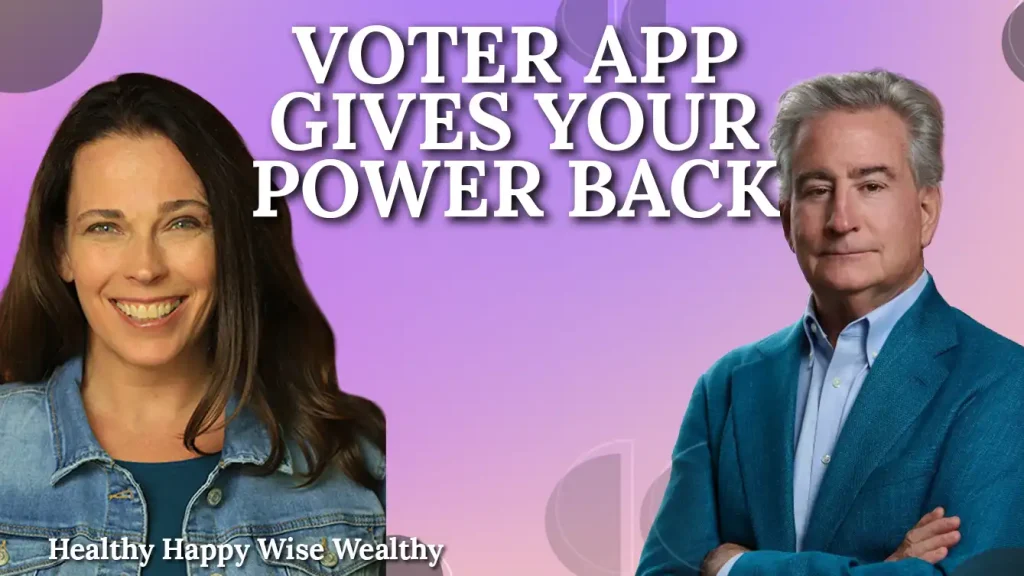
Scroll Down for Show Notes, Resources & Transcript for Tom Joseph’s Episode:
Listen, Subscribe, Download & Review on Podcast Players:
- @YouTube: https://www.youtube.com/@HealthyHappyWiseWealthyNetwork
- @Spotify: https://open.spotify.com/show/53F8vnXux4kMpwt9lDTMk5
- @ApplePodcasts: https://podcasts.apple.com/us/podcast/healthy-happy-wise-wealthy/id1818007426
- @Audible: https://www.audible.com/podcast/Healthy-Happy-Wise-Wealthy/B0FC1SXM9F?eac_link=3Fud9HDfBHBR&ref=web_search_eac_asin_1&eac_selected_type=asin&eac_selected=B0FC1SXM9F&qid=fPZMRMoRkC&eac_id=135-4199497-5436329_fPZMRMoRkC&sr=1-1
- @iHeartRadio: https://www.iheart.com/podcast/1333-healthy-happy-wise-wealth-278739139
- @Pandora: https://www.pandora.com/podcast/all-episodes/healthy-happy-wise-wealthy/PC:1001108771
- @JioSavvn: https://www.jiosaavn.com/shows/healthy-happy-wise-wealthy/2/0zjy7AVRt7I_
- @Anghami: https://play.anghami.com/podcast/1074378718
- @PocketCasts: https://pocketcasts.com/podcast/healthy-happy-wise-wealthy/4fa3ad80-23e3-013e-0d7c-0269e71698d3
- @PodcastAddict: https://podcastaddict.com/podcast/healthy-happy-wise-wealthy/5893803
- @Deezer: https://www.deezer.com/show/1001941251
- @PlayerFM: https://player.fm/series/series-3669869
- @Overcast: https://overcast.fm/itunes1818709834
- @Castro: https://castro.fm/itunes/1818709834
- @CastBox: https://castbox.fm/vic/1818709834
- @GoodPods: https://www.goodpods.com/podcasts-aid/1818709834
- @MetaCast: https://metacast.app/itunes/1818709834
LIsten to a HHWW Episode on How Epstein was Involved in Elections Worldwide:
🌟 Like, Follow & Subscribe on These Platforms:
@Instagram: https://www.instagram.com/healthyhappywisewealthy/
@Facebook: https://www.facebook.com/profile.php?id=61575070976908
@TikTok: https://www.tiktok.com/@healthyhappywisewealthy
@LInkedIn: https://www.linkedin.com/company/healthy-happy-wise-wealthy-podcast/
@YouTube: https://www.youtube.com/@HealthyHappyWiseWealthyNetwork/shorts

Shop HHWW Recommended Products and Services:
Sustainable Haus offers High Quality, Chemical & Plastic Free Cleaning, Cooking and Personal Hygiene Products
Shop HHWW TikTok Shop for Health Conscious Products
Women: Find Like-Minded, Age-Appropriate Friend Groups in Your Area with Real Roots
HHWW Business Partners:
Alternative Lending Business & Real Estate Investor Loans
Learn more and apply here: https://hhwwmmcllc.getbizfunds.com/home-4850
IT Services through Podcast Sponsor Mindiii:
Learn more and request a consult here: https://healthyhappywisewealthy.com/index.php/it-solutions/
Podcast Production and Webinar Services:
Learn more here: https://www.erikachristie.com/
Know someone who should be a guest? Email healthyhappywisewealthy@gmail.com
Mary Meyer is a podcast host, actor, sales professional, mother and entrepreneur helping people and organizations share meaningful conversations that support health, wisdom, clarity, and growth.
Produced by the All-Talented Erika Christie
🎙️Show Notes, Resources & Transcript:
If you’ve ever felt powerless staring at a ballot, worn down by attack ads, or certain that your vote stopped mattering long before election day, this conversation is for you. Mary Meyer sits down with Tom Joseph, entrepreneur, engineer, and founder of America’s Main Street Party, a political startup with a bold idea: what if the people, not super PACs, chose who runs for Congress?
Tom walks us through the app he’s building, the legal loophole that makes it possible, and the surprising founding-father story that inspired it. This episode proves that reform doesn’t require running for office, and that ordinary people have far more agency than we tend to believe. You’re not alone in your frustration, and this conversation offers something rare in politics right now: a hopeful, practical path forward.
Topics Covered:
- Why uncompetitive, gerrymandered districts weaken accountability
- How a political party can legally run a money-free candidate contest
- The app that lets voters narrow a field using approval and ranked-choice voting
- Secure voting technology borrowed from military and civic use
- The story of forgotten founder James Wilson and Wilson’s Fountain
- Building a “pink and baby blue” moderating faction in Congress
- Treating voters like customers instead of attack-ad targets
- How regular people can get involved and donate right now
Key takeaways:
- Reform is possible without running for office you can change the system itself.
- Competition is the antidote to decades of unaccountable incumbency.
- A positive campaign is built in: you can’t tear others down until the debate round.
- Fair and equal elections are, as Wilson said, the original fountain of democracy.
- One person doing something, multiplied, genuinely moves the needle.
- You have more agency than you think so use it.
Some questions asked:
- Can you explain the origin story behind America’s Main Street Party?
- How does a political party legally run a contest free from candidate money?
- Can you walk us through how the app actually works?
- How do you make sure the voting is secure?
- What is Wilson’s Fountain, and who was James Wilson?
- What can someone who’s fed up but not political do right now?
- When do you hope to roll this out, and how does it start?
- What changes would you expect to see in government once it works?
- Could this ever be used for local elections or even the presidency?
Learn more about Tom Joseph:
- Website: MainStreetParty.org (see the “A Brand New Way” page one-minute video and demo link)
- Research hub: WilsonsFountain.us
- LinkedIn: https://www.linkedin.com/in/tomsjoseph/
- Company: BooksToday (remote-first bookkeeping firm)
Resource List:
- Books mentioned: The Lost Founder by Jesse Wegman (on James Wilson) https://us.macmillan.com/books/9781250851093/thelostfounder/
- Programs mentioned: America’s Main Street Party; Wilson’s Fountain; the Digital Democracy Project: https://digitaldemocracyproject.org/
- Apps or tools mentioned: the America’s Main Street Party demo app https://www.mainstreetparty.org/employment
- VOATZ secure voting technology:https://voatz.com/ approval voting and ranked-choice voting
- Organizations mentioned: America’s Main Street Party; Digital Democracy Project; the Federal Election Commission (527 committee structure)
Podcast Chapters:
Chapters:
0:00 – Welcome & Meet Tom Joseph
0:56 – The Origin Story: From PPP Promise to Political Party
4:17 – Super PACs and Who Really Picks Candidates
7:37 – Wilson’s Fountain & the Forgotten Founder
9:19 – Live Demo: How the App Works
15:03 – Funding, Security & the VOATZ Technology
19:47 – Tom’s Background: A Remote-First, Women-Led Company
26:06 – What You Can Do Right Now
29:02 – Rollout Plans & the Road to 2028
36:30 – Local Elections and a National Vision
Tom Joseph’s Transcript:
[Mary Meyer] (0:05 – 0:56)
Welcome back to Healthy Happy Wise Wealthy. We have with us today, Tom Joseph with the America’s Main Street Party. This is something that I will call a startup.
It is in the realm of politics, which we don’t normally cover, but this is not as specific. Party. So this is all about getting candidates in that are really chosen by the people without super PAC money.
So a very timely conversation where the people us are actually choosing the candidates. So, Tom, I’m going to let you take it away and kind of explain. I know this is a startup.
You’re building an app. So tell us a little bit about that. Sure.
[Tom Joseph] (0:56 – 4:16)
And I think the origin stories relevant in terms of where we got. I mean, I’ve been thinking about this for a long time. I’m an entrepreneur.
Never really did anything in politics until a few years ago. But it’s something like a lot of Americans that I always thought about as a business person. The one thing that really drove me nuts was that we had uncompetitive districts.
And if you’re a business and it’s something that’s uncompetitive, it invites competition. And it just bottled my mind that we went decades, having people getting elected over and over and over again, and not really being accountable for that. So I think the height of it struck me during the COVID that I thought partisanship, we’re going to kill each other before the pandemic killed us.
And, you know, got really nasty. And I just committed, and at that time, I owned a business and I applied for PPP money. And, you know, to me, getting it would be like a godsend.
Just insurance that everything I hadn’t worked for my entire career was just going to go up and smoke. And so when I did that, I kind of made a promise that I would do something. I wouldn’t run for office, but I wanted to try to change the system.
And I didn’t really know what I wanted to do. And I did survive the COVID. So I felt my promise, and I started a political party, this party.
But the original idea was to really start another ideological party, kind of like the Forward Party. Like centrist, full people to hire ideals. But as I got further and further into it, understanding how the election law worked, I kind of realized that another party is just more of the same.
And it relies on wealthy people to fund their own domains or people being holding to wealthy people to fund their campaigns. And so I was stuck. And one day I made a joke that we do a better job selecting the next American Idol than we do the next representative of Congress.
And it just kind of struck a nerve with me that, you know what, there’s really no reason why we couldn’t create like this environment that was free from money and create a contest and have it work where people use their cell phones to have input and down the cannon. And as I was doing this, everybody’s telling me it was illegal. But what I found out is that there’s a loophole.
And the loophole was ironic. And the loophole was that if the people were interested in running for office don’t spend money, the party can do whatever it was. And so we can use the legal construct of a political party to create an app, a portal, a technology that creates this fair contest.
And then my thought is to distribute it out to districts and target gerrymandered districts, equal number of red and blue. So this doesn’t come across as us trying to swing Congress in a particular direction. This is just putting competition into districts that don’t typically see it and allow regular people to elevate through almost like an Olympic trials of a nomination contest or mull around and choose a nominee that would then run again and see incumbent Republican or Democrat.
[Mary Meyer] (4:17 – 5:45)
And I think it’s fair to say that super PAC money does not necessarily, it isn’t our interest. So super PAC money is going to protect an interest of something that isn’t just a regular person. Over arching.
This is an issue and the super PACs do choose it. Tom, I don’t. Just to make this a little bit deeper, I did a podcast episode on just kind of when all the Epstein stuff came out of him doing an interview.
So in his interview was all about part of it was the trilateral commission, the trilateral commission, and this is all Epstein’s words. It’s on the internet. I have a podcast on it.
This is his words, not mine. Not making it up. Didn’t read it somewhere.
Just went right to where his interview was that people in politics do not know how to run money. They don’t know money. So they need someone who knows money business people to come in and manage the government for them functionally.
So this functionally is basically saying they’re not. It’s based. It’s a similar to the super PAC money we’re talking about, or maybe it’s the same thing is that this trilateral commission is now has deemed himself responsible for picking candidates across the world.
Hiding in the background. So that’s worked.
[Tom Joseph] (5:46 – 7:32)
No, and I think, you know, they get the people into the seats and as long as they follow what the big money wants and this happens on both sides, their seats are protected. And so people don’t realize that they don’t lose their vote on election day. They lose it when big legislation is up for votes and that their party leadership tells them how to vote.
And it’s based on like point, not even with the 1%. It’s like the 1 10th of 1% that is really following the levers of power. And that’s not really how our system was designed.
We were supposed to have a voice in this process. And because of the districts being gerrymandered, we’re not we’re just voting for the person who’s not the other person. You know, we really don’t.
And there’s no system accountability. So to me, this is I’m an engineer more than a money person. So to me, this is about putting a control system in place.
What we haven’t right now is the system is out of control. So I’m using, you know, a political party, what’s called a 527 committee, local committees, a super PAC and candidate committees in a very different way. This system does use a super PAC, but the super PAC bats who the people pick.
No questions asked. So they have no strings attached to their money. They’re saying, Hey, we’re going to back five say five blue and five red contests and whoever wins, we’re backing.
So if the people show up and, you know, pick their candidate, the super PAC is saying, we’ll put the general election campaign behind them so that they actually have a shot now against the incumbent Republican or Democrat. But how do you how do you vote against this person? I mean, this is a person that over multiple rounds of people have actually chosen who they want versus the person from either party that is just getting read, run through the washing machine every time.
[Mary Meyer] (7:32 – 7:36)
Yeah, will you explain Wilson’s fountain and how it relates to America Street Party?
[Tom Joseph] (7:37 – 9:16)
Mary Mary’s Main Street Party is a political committee, 527 committee. The law prevents any person having too much control over a committee by limiting the amount of money they can donate. So I can only put $5,000 a year into America’s Main Street Party.
Fortunately, my mom, my sister, my daughter, they’re also kicking in. So we’ve been able to make some pride and friends and family and I’ve been able to raise limited money, but I really have to be real careful about what I’ve been there. The whole idea is bigger than that.
So I, there’s a website called Wilson’s Fountain Dot US. It’s named for James Wilson. He’s a founding father.
He played a heavy hand in writing the Constitution. He is the man who added the words and equal to what had been for a century of free election clause based on the 1689 English Bill of Rights. And, you know, back then, opening elections up to everyone being free only meant like landowners, but, but he felt that unless elections were fair, that they would become corrupted.
And he referred to free and equal elections as the original fountain of democracy and that if we allowed it to get poisoned, it would spread to every aspect of space. It was a really great metaphor because you’re saying, hey, if you, you know, especially in that time when they agriculture, you know, if you, if the well is poisoned, it screws up everything. And he was trying to send a message to us that we really have to make sure that elections are fair.
And if they are, it’ll mess up again. Yeah, so anyway, you want to bring the screen and I can give you the demo.
[Mary Meyer] (9:16 – 9:19)
Yeah, I’m on here of the of the app right on America.
[Tom Joseph] (9:19 – 11:17)
Yeah, it’s not really an app. You can’t get this on the, but we went at the look like it will look on your phone. But I’m going to start this off by answering this one.
Because what this is, there’s, this is for District K one, this is Philadelphia Bucks County. We actually populated this contest with 101 potential nominees are mostly conservative because in a red district run, if you think they’re going to run for office, you can actually answer that the same way you did on borders. Let’s see.
This is a conservative. So they probably want to close borders. We’re down to 15 in the local issues.
Let’s say. Make sure you eliminate too many people here. Yeah, you have 10.
So you can say, you know, I can go and look at these candidates and you can see you can see the match up with you on these issues. Find out more about them. Go into their profile.
Or, you know, going back to this, she’s a hey, I can just endorse them all. We use a thing called approval voting. Approval voting allows people to vote for all those.
They feel are qualified. So the approval voting. We go through that.
We’re showing that we’re really not doing a facial verification here, but I want the public to see, hey, we’re going to ensure that you’re the person holding this phone that at this time that you’re submitting these votes. We’re going to go to the next round. Let’s see how many of them made it.
Only one of our candidates made it through to the next round. We could then, you know, loosen our requirements. I’m going to just run this through so you can see how it works.
But as you go to the next round saying you have no matches, but you can see now the people that are left in this top round.
[Mary Meyer] (11:17 – 11:30)
And this app is being built right now. You’re building it out. Okay.
[Tom Joseph] (11:30 – 12:20)
So the leaderboard would show you that here’s here are the four leaders that we have a formal advance into the final four round. I’m just going to advance this to give you the idea. And this we’re showing the public that we can use different methods go from four to two.
And this we’re saying rank choice about it. We’ll say we put Scott first. Maria first Pat will fix the third.
It’ll give you the have you confirm that again. You have to do the facial recognition. It’s going to show that Gary came in fourth.
We can then re rank. And now it gets to the Marie and Scott wound up being the top. We have a debate round.
And we’re envisioning this runs in parallel with the public primary over five to six week period every week having elimination round.
[Mary Meyer] (12:22 – 12:22)
Nice.
[Tom Joseph] (12:23 – 13:24)
And the people then actually choose because the people are choosing that that so we can run the demo now for two different districts. I want to show you that there is. Well, it’s telling you to take the issue quiz to actually get matches on these.
I’m going to put a liberal answer in a conservative district. But. And this is just a strong.
This is just a way that people can see a possibility. This is something that a college intern from Haverford actually designed the app. We had two college interns from Drexel build a prototype.
And then I raised a little more money and I was able to hire a firm here in Pittsburgh used AI to. Basically put this into a demo format. But part of the concept is that people have a hard time even wrapping their heads around what a fair contest would look like.
[Mary Meyer] (13:25 – 13:26)
Right.
[Tom Joseph] (13:26 – 13:27)
Yeah.
[Mary Meyer] (13:27 – 13:27)
Yeah.
[Tom Joseph] (13:28 – 14:23)
But the, the, the ideas that there would be a local committee that would identify seven issues that they think are relevant to that district in this model. We’re saying they’re two global three national two local. So the committee puts them out there.
The local committee, you know, in a partisan district. So what, you know, we’re not really concerned about swing districts. They tend to self moderate.
We really want to go particularly with gerrymandered districts because you have opposition voices that can actually participate in contests. And they’re not going to be able to get a liberal in a conservative district, but they might be able to get a pink independent candidate that’s not tied to the Republican Party and then vice versa in a blue district. The overall goal is to create two more factions in Congress, one that’s pink and when this baby blue that’s not tied to big money.
And if we can do that, I think that will have a stabilizing moderating effect on Congress.
[Mary Meyer] (14:24 – 15:03)
I love that you’re choosing. I love. Okay.
The pink and the light blue. Those are also baby colors. So this is like, this is the brand new baby thing that’s coming out and I think it’s going to work.
You know what I mean? Like there’s nice fun symbolism there. So thank you for walking us through that.
I’m going to take that off for those watching on YouTube. That was very helpful. So right now this is in, you know, the app is being built.
So people are like, yes, this is absolutely something that needs to happen.
[Tom Joseph] (15:03 – 18:34)
So we need to raise money. I first want to gain traction. The devil has only been out a couple of months.
This might be one of the only handful of podcasts that put it up on the screen. So that’s my goal is to gain traction and gain donations be nice. We’ve merchandise on our screen.
I really, my thought was to, I’m trying to recruit like 20, you know, a couple dozen, what I would call Patriot Angels that, you know, looking at this that would make a $5,000 donation and that we could actually build the demo version. So the next version is one that would actually users would actually be able to participate on mass in terms of the voting part of it. But the candidates would still be avatars.
So we want to run this. We don’t want to run it in reality. First time we want the public to really beat it up just like any other software.
You go through a beta release where you gain confidence. You make sure absolutely it’s going to work. And that there’s a large user group that will basically verify that, not just me.
And you have to do a software. You have to run it through a lot of different scenarios to make sure you do that. The other component, which I’m sure is the question that how do you make sure it’s secure.
And so what we’re doing is we’re leveraging a technological votes. V-O-A-T-Z. It’s an existing app.
It’s been used first for military applications when service members are on a submarine or a war zone that they could submit their bouts. And it’s accepted the United States in a lot of states. And votes is also being used by an issue called the Digital Democracy Project where citizens can basically tell legislators how they want them to vote on different issues.
They want to make sure you’re a real voter. So what both these technologies do is that they go out, they link to the state voter record files, link to your ID, use blockchain and encryption to make sure it’s all secure. And this has been running for a year.
We’re going to build our platform using an app called both. So actually, I’m working with Ramon Perez at the Digital Democracy Project who has votes implemented now in seven states. But it was originally technology funded by the military and used in areas where you just can’t get a physical ballot out, like on a sub or a war zone.
So it is adopted technology. The province of Ontario is using those for all city elections now. So other countries are way ahead of us in terms of where they’re taking it.
We’re still with our conspiracy theories. But I think this allows America’s Main Street Party and the Digital Democracy Project to basically be a sandbox for this. You could say, hey, I don’t trust it.
But at the end of the day, it’s going to be the proof is in the pudding. What’s the candidate we produced? Is this somebody popular?
And I think, you know, people buy the records from American Idol because they believe the person won really won. They really do win. And I think the same thing will happen here that if we go from a pool of 50 to 100 candidates down to 20 down to 10 down to four down to two down to one, just like football, basketball, everything we do in life.
You know, we have some sort of process to find the best person except fungus. And don’t tell me it’s not costing us.
[Mary Meyer] (18:34 – 18:52)
Oh, yeah. It’s costing us dramatically. And for me, the main issue, there’s more than one main issue, but I’m very, very frustrated with the food and how everything is just kind of like it’s just basically, it’s so trash here.
Yeah.
[Tom Joseph] (18:52 – 19:00)
That’s so funny. I, I’m eliminated process food for my diet, lost 50 pounds. And I was just trying to get rid of Harper.
[Mary Meyer] (19:03 – 19:06)
Good for you. That’s awesome.
[Tom Joseph] (19:06 – 19:13)
So I, you know, on your happy, healthy, happy wife is wealthy. You know, that helped.
[Mary Meyer] (19:13 – 19:47)
Yeah, for sure. So Tom, can you go back and just so people know a little bit about who you are. And I know there was something that you had talked about when you were in it just the email to me about how your initial business was to help you technology.
This is back in the early 90s. And you employed a lot of stay at home moms. Is that correct?
Yeah. And then as those early years of raising children, can you tell us a little bit about that?
[Tom Joseph] (19:48 – 21:54)
Sure. I mean, I, my background is actually in factory automation of an engineering degree from Carnegie Mellon. I was working at Westinghouse and my dad had a problem in his business, the bookkeeping problem.
And I bought a computer thinking that would solve the problem, but it really didn’t. You need somebody to run it. My sister, who’s small kids said, Hey, I’ll do it, but I don’t want to work there.
You know, and so we set up this routine where she go in once a week and kind of handles books. She didn’t have an accounting background, but few years later, I was actually a number of years later, but I lost my job and I could never shake this idea. So I launched both binders today, and we have over a hundred employees and probably like 10 different states.
We won last two years. We won Pittsburgh’s top small business workplace and through the contest at the Pittsburgh business time. It’s all based on employee survey.
So it’s not a judging thing. It’s a computer does the results. But I we designed this business that remote first employment, probably before anybody was really thinking about it and dealt with a lot of the issues that I’m having in this is that people didn’t trust us with the data and, you know, scaling and getting people to learn a brand new way to do this.
I mean, accountants generally dealt with small businesses on a monthly basis. We wanted to do a weekly basis so that we could take care of the cash. We thought if we can get the business owners out of writing checks, we can manage the cash and tell them, Hey, this is what do you sign this?
This is, you know, we came up with this early on a really simple process and just have just perfected it over the last 35 years. And it’s our company is all women management team. They average 20 years of the company.
They made me superfluous about decade ago. And so I’ve just enjoyed, you know, now working on things that I like and our CEO, Jessica Minkas, who’s fantastic, you know, checks in on me when she knows that she needs to. But they really do a great job running this company, taking a really good idea made it great.
[Mary Meyer] (21:55 – 22:42)
I love that. I’m so thankful that you did that. And that was such an early adopter of things that need that that still haven’t been adopted in a lot of ways to just a technology first remote women in leadership, just in, you know, a way for them to take care of kids and take and doing things well and hearing the people and doing something for people.
So, and that’s, you know, that helps not just women, but that helps the kids, the, you know, the dad that everybody that helps that helps society, you know, when women make some money, but also keep up, you know, if they want to keep a focus on kids be able to do that.
[Tom Joseph] (22:43 – 22:56)
Mary, I thought that they would just come work for both partners for like a handful of years until their kids got back in school, but they, once I think they got into the groove, they didn’t want to give it up. And even at college, what I’m losing them to is being grandma’s.
[Mary Meyer] (23:00 – 23:23)
Then they’re like, okay, that’s so fun. Yeah, well, I am a new grandma too. So I get it in that stage.
She adds a fun new stage. Okay, so back to back to this. So the America’s Main Street Party and Wilson’s Fountain just tells us a little bit more about that and how that ties into the America Street Party kind of with the idea of how can people get involved right now in this stage.
[Tom Joseph] (23:25 – 25:43)
Wilson Fountain is really for people that are nerds about politics. I mean, part of it is some research work that I had college students and so what all of you do, I had to make sure I had this idea, but I wanted to have law students kind of research. The legality of it.
So the first two interns I hired, Gabe Wright and Tulio Tagliatharay, both at Penn, researched all the federal election commission code and kind of examined each committee and what we have to do kind of came up with a manual of how we could execute this legally. But I had other interns write papers on like do free and equal elections, qualitative extremism and the two international students researched what things in Europe and did kind of came up with the case that they do. And so there’s this type of research that’s on there.
It’s also allowed me to like sponsor conferences in the nonpartisan election space. And like I said, I’m helping fund turning votes into a software developers toolkit from an app so that both my app and the digital democracy project app, we can embed the code in our apps and not have to go through another. So paying for things like that.
But the interesting thing about this is James Wilson, this founder that nobody knows about, who wrote, he drafted the Constitution. The first version of the Constitution were in his handwriting. He had the words, we the people.
He had all this stuff that he’s just lost in history because he died bankrupt. He was presiding on the Supreme Court speculated on land. And there was I think the French and something happened where all his stuff went kind of underwater and he was literally evading his creditors while riding on the circuit Supreme Court circuit and died from malaria.
He caught in debtors prison. I mean, it’s a tragic story. But there’s a book that just came out on him called The Lost Founder by Jesse Wegman.
And really fascinating if you want to understand kind of like what this guy meant to popular sovereignty. And my mission is really about popular sovereignty, like letting the people be involved in the selection process, which is really what James Wilson believed.
[Mary Meyer] (25:44 – 26:06)
Yeah. Well, that’s a that’s a lot to kind of go into. So if someone is is really.
Okay, so for the person who isn’t really into politics and following it indebted to that, but they really are also fed up. And they’re fed up with the commercials and they’re fed up with all this stuff. What can they do right now?
[Tom Joseph] (26:06 – 26:59)
Well, like the first learn about the process. I would say go to Main Street party.org. There’s a page called a brand new way.
A brand new way provides a narrative, a one minute video and a link to the demo. So learn about the process. Tell your friends.
If you have the means to donate, please, I love a donation. We have some cool merchandise that you can get. I like our sticker that says our fringe group is extremely moderate.
But yeah, we and this would be donation is going to build an asset, not to some terrible political. And we want to do things differently, like where we don’t text message. You know, we want to change the whole constituent experience.
You know, treating voters like customers, not like how they’re treated now.
[Mary Meyer] (27:00 – 27:53)
Yeah, I’m getting texts from three states because I moved from Tennessee to Georgia to Nevada. All three states are sending me text messages right now for different candidates. So that can really definitely happen.
So that’s that’s a really good idea. I feel like everyone. Myself at the forefront needs to find ways were incorporated into our daily lives.
We can make better choices with politics and have a more connected understanding of politics because it just does seem like politics is here. And we’re here. And the only thing we know about the candidates is what we hear and an ad in the ads.
I mean, really nothing. Yeah. And what can you say in 30 seconds, except for this person’s awful.
So vote for me. And then there’s the music and. And so that’s that’s not that’s not helping us at all.
[Tom Joseph] (27:53 – 28:19)
And they can’t they campaign against. They don’t. And so what I think is interesting about the nature of this is that you really don’t campaign against until the debate round.
Otherwise, you’re going to tear yourself down. So to get to that final point, you have to have a positive campaign. And you have to tell people what you’re going to do.
And right now, they’re not held accountable to tell us what they’re actually going to do and what they spend on a congressional one.
[Mary Meyer] (28:21 – 29:02)
Yeah, and it does feel like it’s kind of like the it’s outside of our another thing that I found very interesting recently is realizing that. Local governments are signing and government people are signing NDA. So a non disclosure agreement that government signing with different corporations and how is that.
That that’s should not be a thing. Yeah, there’s there’s some trust. I mean, you can’t be hiding information from us.
There’s also be the ones who are. So there’s yeah, there’s a lot going on with that. So this, I love, I love this idea.
So do you have an idea for when the rollout will be and how it will start what year it’s going to start incorporating into elections that goal for that.
[Tom Joseph] (29:02 – 30:07)
My target is for the 2028 primary season, which is only like 15 16 months away. So in that time, I don’t think developing the app into a production version is a huge hurdle. But for me, I don’t want to go forward until I find my venture capitalist, which is a person that will back the super pack.
I’m going to find somebody who’s a. A Ross Perot like guy kind of wrote this little piece where I said, you know, Ross Perot, we’re around now. He probably fund the super pack not run.
Because he cared about reforming Congress that his reform party was about reforming Congress and I need to find my Ross Perot. And until the business quiver until a product new product finds his venture capitalist, you can’t really take it to market. So I’m going to just keep chunking away, pitch in my pitch, evolving the technology as we can.
But to me, the gating part will be finding this person in the center or people in the center. Maybe a coalition of wealthy people will say, Hey, it’s time to do something completely.
[Mary Meyer] (30:09 – 30:35)
Yeah, regular people can donate $5,000 to the main street party per year annually US citizens. Okay, US citizens. And please just US citizens.
Yes. There’s outside money coming into our elections too. So through different ways.
So the super pac money is that going to be something that’s how is that going to incorporate into the app.
[Tom Joseph] (30:36 – 32:14)
It doesn’t. So to me, this is like a system that the Wilson Fountain defines a system of checks and balances. So the party, you know, we publish the app so we don’t get too involved in the local contest.
The local contest, they have to run it. But the party at the end of the day have to say, Hey, they either follow the rules or they didn’t. So we can validate the results for the super pack.
And the super pac could say their control could be, well, the public’s got to participate. You know, if we put a contest in there in the super pacs, putting up 5 million prize money, nobody shows up to those. I mean, I think the super pac ought to be able to pull out and say, maybe we’ll spend that money somewhere else where we get engagement.
So to me, there’s all these things. And because the super pack is separate entity, I am trusting that these people will follow our open disclosure that it won’t be dark money. The more it will say, here’s the money coming in, who it’s from.
I can’t believe that they wouldn’t want to be known as the folks that are trying to capitalize a more perfect union. And if we follow sunshine rules across the board, the party itself has to do it. Like I just filed my FEC filing to for all our revenue and expenses.
And there’s, you know, everybody’s named it. There’s no like shadow corporation in there that’s, you know, doing something. You know, it’s just our software vendors and that.
I mean, this is peanut money that we have now. But what you, at some point, it will be larger money, but most of that will be through the super pack and the purpose will be to defeat incumbent Republicans and Democrats.
[Mary Meyer] (32:14 – 32:48)
Yeah. So we’re looking for kind of a centrist Republican Democrat, you guys, everyone can play together. I think for the most part, we’ve been so, you know, like you said, we’ve been so pitted against each other.
And a lot of people have come out of that. I’ve read recently that, I don’t know, 70% of voters, maybe more now are considered themselves independent. They’re kind of coming out of the left and the right and they’re sick of it.
So a large portion of that. Hopefully that was accurate information, but I do think there’s more and more of us who are kind of just, we’re kind of just sick of it.
[Tom Joseph] (32:49 – 33:09)
Yeah, no, the percentage of people, especially with young people, the percentage of young people joining political parties is almost zero. I mean, they really do not want to affiliate. And, um, but they certainly have leanings.
And in some states, you have to, like I’m an independent in Pennsylvania. I can’t vote the private.
[Mary Meyer] (33:12 – 34:00)
So that’s true. Yeah. So when this gets rolled out in a district and, and it works.
And the, the people that are in the government are the ones that are chosen specifically by the people without the super PAC money without the people, the super PAC money also means those are the people that are actually telling them how to vote. Because, you know, you have to be beholden to the people who who are paying you who basically paying your mortgage and your salary, you know. So that’s, that’s the issue with that.
So what do you see the difference in the government’s going to be? Let’s say when this rolls out in a state and it’s all rolled out in one state. Pennsylvania or whatever it is, like what kind of changes would you expect to see in government?
[Tom Joseph] (34:02 – 34:56)
Well, we would only roll it out, at least initially in gerrymandered districts, but there are a lot to us. And it wouldn’t be, we wouldn’t be picking states. We’d be picking districts and where we can win and where we think we can help stabilize.
But what I see eventually happening is as soon as there’s enough American Main Street Party reps in Congress that neither party holds a majority, the Speaker of the House election moves into the main chamber and will not be a party leader. It’ll be somebody probably from a swing state. That in itself would be historic.
Because then all the committee slums, everything that proceeds from that is now moderated. You know, that person say, hey, it’s got to be, you know, they’re going to do it. It might actually be based on competency.
Right now, you know, the person running the agricultural committee might not be from an agricultural state. They may have just picked that because they raise a lot of money and they got to pick it. I mean, the way they do the committee slums is completely ridiculous.
[Mary Meyer] (34:58 – 35:03)
Yeah. So more of our say in all the levels of government. So, yeah, that’s great.
[Tom Joseph] (35:04 – 35:33)
But the most important thing is that they would, to get reelected, you have to go back through the free and equal contest. If that person, all of a sudden say, hey, I think I’m going to go to the public primary. They’re going to face the winner of our contest.
So, and I also think that they wouldn’t be the type of person. If they did that, you’d hope that they believed in the system. To me, it really only works if we make people go through the system again, you know, because if they don’t go through the free and equal contest again, then we’re back in the same place.
[Mary Meyer] (35:34 – 36:02)
Yeah. So, yeah, this, I think it’s definitely a thing that could work. And I appreciate when I think the problems are so bad that for me, I’m like, well, what can I do?
I’m one person and you’re one person doing something. I’m one person doing something. So, if everyone does the thing that makes this world a little, you know, more fair, more just more healthy, you know, that it does make a difference.
It just, we do have a more agency to make a difference than we think.
[Tom Joseph] (36:04 – 36:05)
We have to do something.
[Mary Meyer] (36:06 – 36:30)
We have to do. We have to. There’s no, there’s not an option.
This is headed straight to the trash can. So, what about for local elections? I know this is geared more towards initially gerrymandered congressional.
Is there a way that local elections can use some platform like this eventually, or is that just not going to be a thing for now?
[Tom Joseph] (36:31 – 37:26)
And so my, my plan is for Americans of Main Street party become a source for election software that can be configured for all types of elections. I think the reason we’re going after this is one, it’s the biggest problem. Two, I think people tend to put the money into solving the biggest problem and that the byproduct would be, you know, these tools that could be used for municipal elections or mayoral elections and be configured in different ways to be appropriate for that.
That district, they may not like range choice, you know, so allow them to configure what they like. So that in itself right now like to change anything in a primary election requires, you know, an act of Congress. And if we do this within this structure, it gives us a lot of flexibility, let technology professionals and business people really figure out the best way to do this.
[Mary Meyer] (37:27 – 37:34)
Yeah, because regular people of voice, which is so what we need. So that’s exactly awesome.
[Tom Joseph] (37:35 – 38:33)
So my long term goal is that we would replace the nominating process for the president and have a system. You know, once we have an install base that’s big enough, we can have people weigh in over the course of, you know, weeks to eliminate large field down to one that people agreed on. Because this process we have now is so, for the president, it’s so goofy.
Once, you know, we expanded from just a handful of house seats to a dozen and into the Senate that you eventually get an install base that we can have a national nominating contest for president where everybody weighs in at the same time. Not that for whatever reason, Iowa or New Hampshire, all of a sudden set the course of who’s going to be president of the United States. It seems it’s such a silly system that we have and that we are here centuries later doing the same thing.
We should be kicking ourselves with a lack of innovation.
[Mary Meyer] (38:34 – 39:37)
Yeah. So if we have, and I, well, in the presidential election is the one where we just go absolutely crazy and, you know, get hateful towards each other. And I do think almost fine.
I don’t know that we pick people on both parties that are that make you mad if you look at them, you know, like, there’s things so, so what you’re saying is that if you could explain it again. So once the, the app is going to go on a gerrymandering gerrymandered districts or congressional seats, and then eventually you have enough congressional seats that there is enough there where we can, you can. We can, you can, we can.
You know, the people choose the president, not by this is who the Democratic Party picked. This is who the Republican Party picked, but through more of a democratic process. Kind of like we use for American Idol.
Did I get that right? I mean, it’s, it’s, I always have a better option, have a better option than we do for choosing our president.
[Tom Joseph] (39:37 – 39:48)
You could laugh. But that’s modeling this after a reality show, but we’re in a reality show right now and it’s really bad. And maybe this one will produce better characters.
Right.
[Mary Meyer] (39:48 – 40:30)
It’s only funny. Well, it’s funny because it’s like, it’s not like it’s not possible. Right.
They do it right in front of our face. So, so it is absolutely possible. So that that’s a really lovely idea.
So, so let’s just paint the picture for what that would be. So in that case, instead of the, here’s your option for the Democratic Party, here’s your option for the Republican Party, which may be the party chose. And the people who vote that direction and you can choose the person.
So this would be like, it would, could anybody who thought they had a good idea as the president, like put their name in the hat? Like, how would it work?
[Tom Joseph] (40:31 – 41:39)
I think in that case that there would be some way of polling to produce a list of candidates, like that. I haven’t really given a ton of thought to it. But, but I do think that there would be a way that somehow through polling, you get, you get a certain minimum.
Now you’re in the context. And so that, but I seriously, I don’t like talking about too much because it gets to focus. Like, I think this is a mistake when people think about third parties are like president.
And so I was like, no, let’s focus on, you know, the Constitution starts with the House of Representatives every two years. I think the framers understood that if things got out of whack, this is the place to go to put it back, you know, reset it. And so that’s the thought is that, you know, we have a chance to eat away at this.
If the first goes five red, five blue house districts made the second time is 20 red, 20 blue and three senate, three blue, three red senate. And start the small stays and continue to build that. But at some point, we would publicly realize this works, we’ll download the app and then we’ll be able to do that.
Yeah.
[Mary Meyer] (41:41 – 41:58)
Well, thank you for that. I appreciate that. I was thinking like, let’s paint a picture about what that could be, but that’s good enough, you know, start.
This is where we got to start. And from there, it would be some cut. We would enable it to be a thing where we could go to the next step.
And it’s not this chosen for you scenario.
[Tom Joseph] (41:59 – 42:26)
The president wasn’t supposed to be so important. I mean, they put them second for a reason. Yeah, the speaker was supposed to actually be as a more powerful and that was, you know, a consensus vote of the body to pick that person.
And it’s not. They make that selection outside the chamber. And it’s usually, you know, the most biased partisan person of the party.
That’s how they become the leader of the champion.
[Mary Meyer] (42:26 – 42:54)
Yeah. Yeah, extremism seems to have taken over. So this is a wonderful way to let’s bring it back to normal people with, I mean, this country is full of intelligent people with great ideas and innovators and people who are very staunchly protective.
This, I mean, there’s, there’s problems for sure, but it also is filled with some really good people. So those really good people need to have the platform and the voices for sure.
[Tom Joseph] (42:55 – 43:00)
We the government of the people by the people for the people. We don’t have that.
[Mary Meyer] (43:01 – 43:38)
We really don’t, which is very unfortunate. There’s a lot of a game playing behind the scenes. It’s not good.
Super PAC money, whatever chosen for us. The 1% of 1% I think you said is funding it. So Tom in closing, this has been really helpful and everyone go to America’s Main Street party, make a donation and figure out how you can get involved one way or the other.
Or do you take meetings with people if they have an idea and they want it, you take meetings? Okay. So tell people, so someone wants a meeting with you.
How did they get a hold of you? How does that go?
[Tom Joseph] (43:38 – 44:03)
There’s contact information on the website. You can find me on LinkedIn, Tom Joseph, any of these book managers, Main Street Party Wilson, something. Yeah, I connect on LinkedIn.
A lot of political stuff on LinkedIn as far as the organizations. People aren’t getting political generally, but in terms of like what is happening within the industry. I think LinkedIn has been a pretty good place for us.
[Mary Meyer] (44:04 – 44:08)
Yeah. Yeah, that’s great. Any closing thoughts for us?
[Tom Joseph] (44:09 – 44:23)
No, get out the boat. I mean, spread the word. And thank you so much, Mary.
You know, there’s nothing more I need than oxygen. Ideas have to have oxygen and this is it.
[Mary Meyer] (44:23 – 44:39)
Yeah. Well, it is a, it’s a, to me, it’s very original and very practical and ways that it’s a revolution legally legal revolution. That’s good.
We like those.
[Tom Joseph] (44:40 – 44:41)
Positive disruption.
[Mary Meyer] (44:42 – 44:58)
Positive disruption. That’s a great way of framing it. Well, Tom, thank you again.
I appreciate you. And we’ll put all the details and ways to get ahold of you and information in the show notes. If anyone’s looking for a specific link to click, that will be there.
And you have a great day, Tom. I appreciate you.
[Tom Joseph] (44:59 – 44:59)
Thank you so much.